When Does a Solar Project Need a PE Stamp? State-by-State Guide for 2026
Why Solar Installers Need to Understand PE Stamp Requirements
A permit rejection can put an entire solar project on hold. One common reason is missing engineering documentation. A PE stamp can become essential when an Authority Having Jurisdiction (AHJ) requires proof that a solar installation meets structural or electrical design requirements. However, not every residential or commercial installation needs one. The challenge for US solar installers and EPCs is knowing when to involve a licensed engineer. Understanding state laws, local building codes, and project-specific conditions helps teams prepare compliant plans, avoid resubmissions, and keep installations moving.
What Is a PE Stamp in Solar Installation?
A Professional Engineer (PE) stamp is an engineer’s official seal on technical documents. It confirms that the engineer takes professional responsibility for the engineering work within the stamped scope.
For solar projects, engineers commonly stamp:
- Structural calculations and roof assessments.
- Solar panel mounting and attachment details.
- Wind and snow load calculations.
- Ground-mounted system foundations.
- Electrical designs and calculations, when required.
Importantly, a structural PE stamp does not automatically approve an electrical design. Each discipline has separate requirements. Therefore, installers should confirm exactly which documents need engineering approval before submitting plans.
When Does a Solar Project Need a PE Stamp?
There is no single nationwide rule that requires a PE stamp for every solar installation. Requirements depend on state engineering laws, local permitting rules, and the project’s complexity.
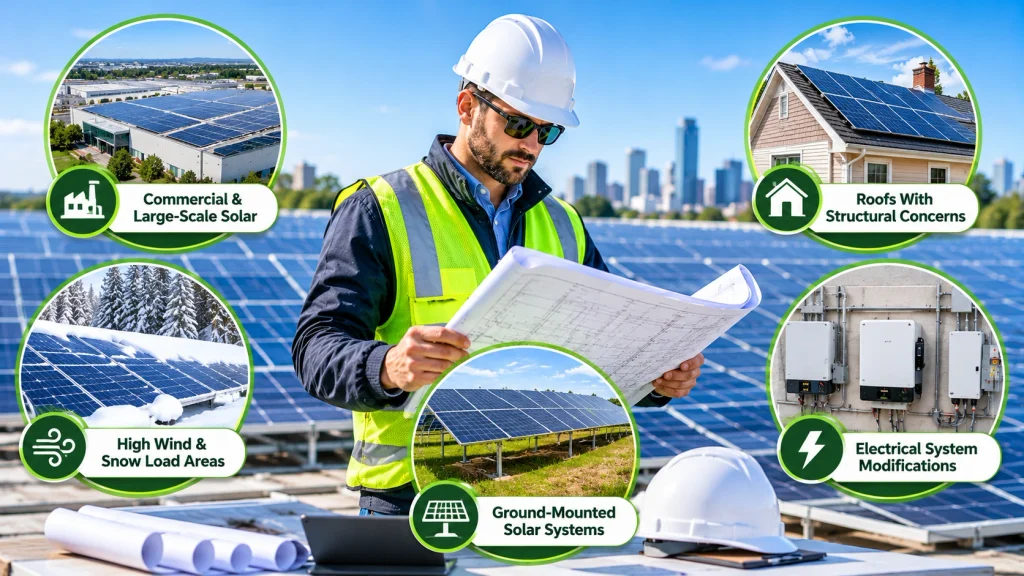
Nevertheless, several situations commonly trigger engineering review.
1. Commercial and Large-Scale Solar Projects
Commercial rooftops, industrial facilities, and large solar arrays often require structural calculations. Their additional equipment weight, attachment systems, and wind exposure can affect the existing structure.
2. Roofs With Structural Concerns
Older buildings, damaged roofs, unusual framing, and limited load capacity may require a professional structural assessment.
3. High Wind and Snow Load Areas
Installations in hurricane-prone regions or areas with heavy snowfall need careful load calculations. Engineers may need to verify panel attachments, uplift resistance, and roof capacity.
4. Ground-Mounted Solar Systems
Ground-mounted installations often require engineering for foundations, soil conditions, wind resistance, and structural supports.
5. Electrical System Modifications
Large electrical services, complex interconnections, and substantial service upgrades may trigger electrical engineering requirements. Check the applicable electrical code and AHJ submission rules.
PE Stamp Requirements: State-by-State Guide for 2026
The following overview highlights important differences across major US solar markets. It is a practical permitting reference, not a definitive legal ruling for every municipality.
| State / Market | What Solar EPCs Should Know |
|---|---|
| California | Requirements vary by jurisdiction. San Diego allows qualifying PV plans to be signed by certain licensed contractors or registered engineers. Structural calculations require an eligible design professional. |
| Florida | Wind-load calculations and structural documentation receive particular attention. Miami-Dade requires signed and sealed structural documentation and identifies specific thresholds for electrical engineering seals. |
| Texas | Requirements vary by city and project scope. Engineering documents issued by a Texas PE generally require the engineer’s seal. Check local building department requirements. |
| Arizona | State law limits when counties and municipalities can demand a PE stamp for solar PV systems. If an engineering stamp is considered necessary, the authority must provide a written explanation. |
| New York | NYC requires a PE or registered architect to evaluate whether the building can support solar equipment. Additional construction and electrical permits may apply. |
| Maryland | Prince George’s County requires commercial PV plans to be designed, stamped, and sealed by a Maryland PE. |
| Massachusetts | Local building officials may require a PE or structural engineer’s stamp for rooftop installations. Structural guidance can help determine when additional review is appropriate. |
These examples show why EPCs should never assume that a neighboring city follows the same requirements. Even within one state, permitting pathways can differ.
For example, Arizona’s solar permitting statute restricts blanket stamp requirements. Meanwhile, Miami-Dade has detailed signed-and-sealed structural submission requirements.
Structural vs. Electrical PE Stamp: Know the Difference
One common mistake among solar EPCs is assuming that one engineering stamp covers the entire project.
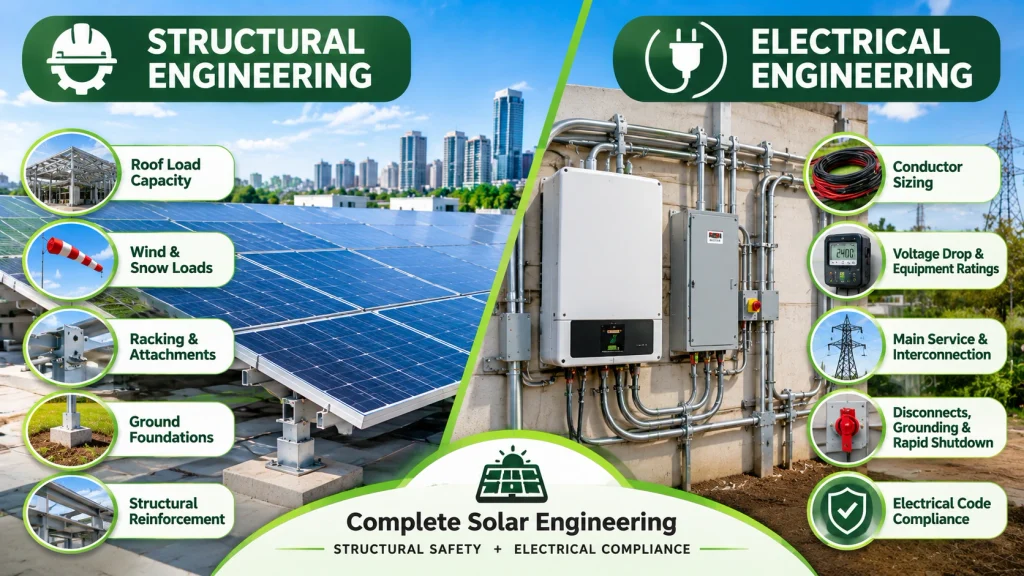
In reality, structural and electrical engineering address different risks.
Structural engineering evaluates:
- Roof framing and load capacity.
- Wind uplift and snow loads.
- Racking systems and attachment points.
- Ground-mount foundations.
- Structural modifications and reinforcement.
Electrical engineering evaluates:
- Conductor and overcurrent protection sizing.
- Voltage drop and equipment ratings.
- Main service and interconnection calculations.
- Disconnects, grounding, and rapid shutdown.
- Electrical code compliance.
For this reason, confirm whether the AHJ needs one or both engineering disciplines.
5 Checks Before Submitting PE-Stamped Solar Plans
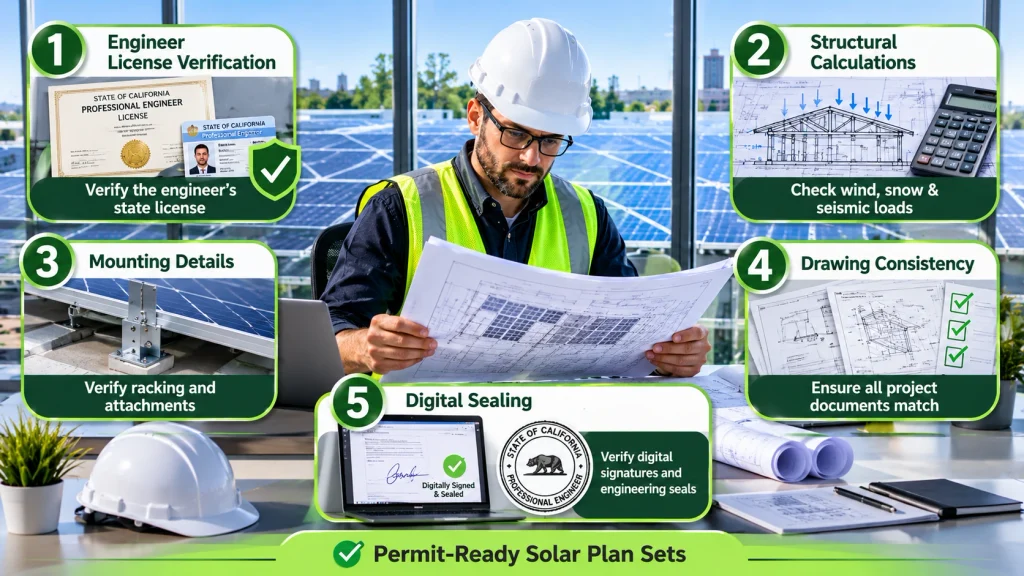
Getting the stamp is only one part of the process. EPCs should also verify the complete engineering package.
- Check the engineer’s license: Confirm that the PE holds an active license in the project state.
- Verify structural calculations: Include applicable wind, snow, seismic, and dead-load calculations.
- Review mounting details: Ensure attachment spacing, racking specifications, and roof connections match the approved design.
- Confirm drawing consistency: Equipment schedules, electrical diagrams, calculations, and site layouts must agree.
- Check digital sealing requirements: Some AHJs require digitally signed and sealed PDFs rather than scanned signatures.
For example, Miami-Dade does not accept scanned copies as substitutes for compliant electronic signatures and seals.
Common PE Stamp Mistakes That Delay Solar Permits
Even experienced installers can overlook engineering requirements during busy project cycles.
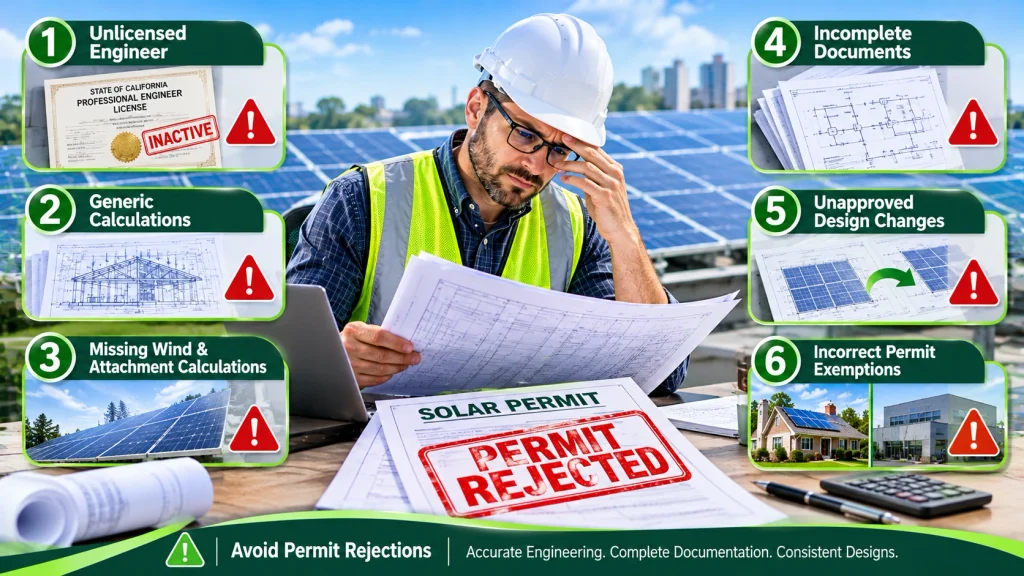
Watch out for these mistakes:
- Using an engineer who is not licensed in the project state.
- Submitting generic structural calculations that do not match site conditions.
- Missing wind uplift or attachment calculations.
- Sending structural drawings without the required electrical documentation.
- Changing equipment or mounting layouts after engineering approval.
- Assuming a residential permit exemption also applies to commercial projects.
Most importantly, never treat an old stamped plan as approval for a redesigned system. Engineering documents must reflect the actual installation.
How Energyscape Renewables Helps Solar Installers With PE Stamping
Managing engineering, plan sets, and permitting across multiple states takes time. EPCs also need to coordinate licensed engineers, designers, and AHJ requirements without slowing down installation schedules.
This is where Energyscape Renewables supports solar installers and EPCs.
Through its solar engineering and permitting services, Energyscape provides:
- PE stamping: Engineering stamps through professionals licensed in the relevant project state.
- Structural engineering: Roof assessments, structural calculations, and engineering documentation.
- Electrical design: Solar electrical plans and engineering reviews.
- Permit-ready plan sets: Residential, commercial, and utility-scale solar documentation.
- Permitting support: Permit submissions and AHJ coordination.
The company also offers Sunscape to help installers manage project workflows, documentation, and permitting activities.
By connecting design, engineering, and permitting, EnergyScape Renewables helps EPCs reduce administrative work and focus on project execution. Explore its solar engineering and permitting services or learn more about the Sunscape solar management platform.
Final Thoughts
A PE stamp is not automatically required for every solar installation. However, understanding when engineering certification becomes necessary can make a significant difference to project timelines and permit approvals.
For solar installers and EPCs, the best approach is simple: verify the local requirements, identify the engineering scope early, and ensure every drawing reflects the final system design.
A well-prepared engineering package helps prevent avoidable permit comments, protects project schedules, and gives building officials the documentation they need to review the installation.
Frequently Asked Questions About Solar PE Stamping and Engineering Services
1. Does Energyscape Renewables provide PE stamping for solar projects?
Yes. Energyscape Renewables supports solar installers and EPCs with PE stamping and engineering documentation to help meet project-specific requirements. Engineering services can support residential, commercial, and larger solar installations, depending on project scope and location.
2. Why should solar EPCs choose professional PE stamping services?
Professional PE stamping helps EPCs address structural and electrical engineering requirements, prepare compliant permit documents, and reduce the risk of avoidable AHJ rejections. Working with qualified engineers also helps keep project documentation accurate and consistent.
3. What solar engineering documents may require a PE stamp?
Depending on the jurisdiction and project scope, documents may include structural calculations, roof assessments, wind and snow load calculations, mounting details, foundation designs, and electrical engineering drawings. Energyscape Renewables helps solar teams with engineering documentation based on project requirements.
4. Can Energyscape Renewables help with solar permitting and plan sets?
Yes. Energyscape Renewables provides solar engineering and permitting support, including permit-ready plan sets and engineering documentation. These services help EPCs coordinate design requirements and prepare project submissions for local permitting authorities.
5. How can solar installers get started with Energyscape Renewables?
Solar installers and EPCs can visit Energyscape Renewables to explore its engineering and permitting services. They can discuss their project requirements, location, system type, and documentation needs to determine the appropriate engineering support.