
How to Transfer Interconnection on an Orphaned Solar System

Why an Orphaned Solar System Needs an Interconnection Transfer
Every year, more solar companies shut their doors. When that happens, homeowners end up with an orphaned solar system and nobody to call. Some systems are fully built but never got Permission to Operate (PTO). Others produce power, yet the utility still lists a defunct contractor on the file. For installers and EPCs, these stranded projects are a real revenue opportunity. However, you can’t energize, service, or bill for that work until the interconnection transfer is done. The good news is that the process is manageable. With complete records, a solid engineering review, and a clear plan with the utility, you can take over the file and bring the system online in weeks, not months.
What Makes a Solar System “Orphaned”?
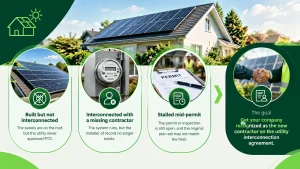
An orphaned solar system is any installation that lost its original installer before the project closed out or while it still needed support. In most cases, it falls into one of three buckets:
- Built but not interconnected: The panels are on the roof, but the utility never approved PTO.
- Interconnected with a missing contractor: The system runs, but the installer of record no longer exists.
- Stalled mid-permit: The permit or inspection is still open, and the original plan set may not match the field.
Each scenario needs a slightly different approach. Still, they all share one goal: getting your company recognized as the new contractor on the utility interconnection agreement.
Why Solar Interconnection Transfer Matters for Installers and EPCs
Utilities only work with the parties listed on an application. So, if the old installer’s name stays on the file, the utility won’t share status updates with you. It also won’t accept your revisions or schedule a meter swap.
Beyond that, the homeowner may lose net metering credits while the system sits idle. Meanwhile, your crew carries liability for equipment you didn’t install. A formal solar interconnection transfer fixes both problems. It puts you in control of the file and documents exactly where your responsibility begins.
Step-by-Step: How to Transfer Interconnection on an Orphaned Solar System

Step 1: Audit the Orphaned Solar System On Site
First, send a crew to inspect the site before you sign anything. Check module and inverter models, rapid shutdown, labeling, conduit runs, and the main service panel. Also, photograph every component and compare it to any plans the homeowner has. Undocumented changes are common on abandoned jobs, and you want to find them now.
Step 2: Recover the Original Interconnection Records
Next, collect every document you can find. Ask the homeowner for their contract, permit card, inspection reports, and utility emails. Then, look up the interconnection application number on the utility portal or request it directly. The key records include:
- Interconnection application or queue ID
- Approved single-line diagram and plan set
- Building permit and inspection history
- Any PTO letter or net metering agreement
Step 3: Get Written Homeowner Authorization
After that, have the homeowner sign an authorization letter or contractor change form. Most utilities require the customer of record to approve a new installer. Without that signature, your request won’t move forward.
Step 4: Submit the Interconnection Transfer Request
Now you can file the request. Many utilities offer a contractor change or change-of-ownership form inside their interconnection portal. Others still want an email or PDF submission. Either way, include the application ID, homeowner authorization, your license details, and proof of insurance. Additionally, confirm whether the utility charges a fee or requires a new application altogether.
Step 5: Correct the Design and Update the Plan Set
If your audit uncovered changes, update the design right away. For instance, a swapped inverter or added modules will require a revised single-line diagram. In some cases, the AHJ will also want a new structural or electrical PE stamp. Submitting accurate as-built plans prevents rejections later.
Step 6: Close Out Inspection and Secure PTO
Finally, schedule any remaining AHJ inspections and send the sign-off to the utility. Once the utility approves the file, it will issue PTO or update the net metering agreement. At that point, the orphaned solar system is officially yours to energize and support.
Common Interconnection Transfer Roadblocks (and How to Avoid Them)
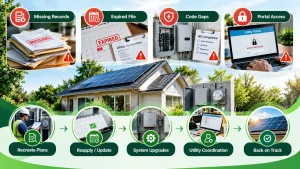
Even a clean takeover can hit snags. Here are the most frequent ones:
- Missing paperwork: Old installers often leave no records behind. In this case, recreate the plan set from field data.
- Expired applications: Some utilities close stale files. As a result, you may need to reapply and pay new fees.
- NEC code gaps: Older systems may not meet current rapid shutdown or labeling rules. Therefore, budget for upgrades.
- Portal access issues: The utility may lock the account to the old contractor. So, call the interconnection desk early.
Planning for these issues upfront keeps your timeline realistic and your homeowner informed.
FAQs About Orphaned Solar System Takeovers
Can a new installer take over an interconnection application?
Yes. Most US utilities allow a contractor change once the homeowner signs an authorization form.
How long does an interconnection transfer take?
It usually takes two to eight weeks. The timeline depends on the utility, document quality, and required inspections.
Do I need a new permit for an orphaned solar system?
Not always. However, you’ll need a revision if the installed equipment differs from the approved plans.
How EnergyScape Renewables Simplifies Orphaned Solar System Takeovers
Taking over an orphaned solar system shouldn’t slow down your whole pipeline. That’s exactly where EnergyScape Renewables steps in. Our team handles the heavy lifting behind every interconnection transfer, so your crews can stay in the field.
We start with site surveys that capture as-built conditions accurately. Then, our engineers produce revised plan sets and PE stamping across all 50 states. On top of that, our permitting and interconnection specialists manage utility forms, AHJ follow-ups, and PTO tracking from start to finish. We also offer back-office support to keep documentation organized and deadlines on track.
For teams juggling multiple takeover projects, visibility matters just as much. That’s why many installers pair our services with Sunscape, a solar CRM built to track projects, documents, and utility milestones in one place.
Ready to turn stranded systems into completed installs? Contact EnergyScape Renewables today and let’s get your next takeover to PTO faster.
sjayakanth@energyscaperenewables.com