
Solar Site Assessment Checklist: 2025 Guide for EPCs

The Complete Solar Site Assessment Guide: Your Path to Profitable Project Success
Solar installations have skyrocketed across America, with over 235 gigawatts (GW) of solar capacity installed nationwide, enough to power over 40 million homes. Yet behind every successful installation lies a critical foundation: a thorough solar site assessment. For US solar installers and EPCs operating in this booming market, mastering site assessment isn’t just about avoiding costly mistakes—it’s about maximizing returns and ensuring long-term project success.
A comprehensive solar site assessment determines whether a location can support a profitable solar installation while identifying potential challenges before they become expensive problems. Bottom line: Companies using advanced assessment techniques see higher project success rates, reduced unexpected costs, and better customer satisfaction.
Understanding Solar Site Assessment: More Than Just Looking at Roofs
A solar site assessment goes far beyond simply measuring roof space. It’s a systematic evaluation that examines multiple interconnected factors affecting system performance, installation costs, and long-term viability. The assessment usually involves a review of the site’s solar resource, shading, availability of roof or ground space, orientation, and electrical infrastructure.
Think of it as the foundation of every successful solar project. Just as you wouldn’t build a house without checking the ground beneath it, you shouldn’t install solar without understanding every factor that affects performance.
Key Assessment Components:
- Solar resource analysis and irradiance mapping
- Shading analysis using advanced tools
- Structural integrity evaluation
- Electrical infrastructure assessment
- Environmental and regulatory compliance checks
Your Complete Solar Site Assessment Checklist
Phase 1: Pre-Site Investigation

Before stepping foot on the property, gather essential information:
Customer Energy Profile
- Review 12 months of utility bills
- Analyze peak usage patterns and seasonal variations
- Understand future energy needs (EV charging, pool installation, etc.)
- Document current electrical panel capacity and age
Regulatory Research
- Check local permitting requirements and timelines
- Verify HOA restrictions and aesthetic guidelines
- Research available incentives and interconnection policies
- Confirm zoning compliance for the installation type
Initial Site Screening
- Use satellite imagery for preliminary roof assessment
- Check property orientation and obvious obstructions
- Verify site accessibility for equipment delivery
Phase 2: On-Site Physical Assessment

Roof Evaluation for Rooftop Systems The roof assessment forms the backbone of residential solar installations. The longest part of the site assessment will be on the roof, analyzing for shade and taking measurements.
Structural Analysis:
- Measure roof dimensions and calculate available space
- Assess roof condition, age, and material type
- Check for signs of damage, leaks, or needed repairs
- Evaluate weight-bearing capacity for panel installation
- Document chimney, vent, and HVAC equipment locations
Roof Orientation and Tilt:
- Measure roof azimuth (compass direction)
- Calculate roof pitch and optimal panel placement
- Identify multiple roof planes and their potential
- Consider future roof maintenance access requirements
Ground-Mount Site Evaluation For utility-scale and large commercial projects, ground conditions become critical.
Terrain Assessment:
- Evaluate topography and grading requirements
- Check drainage patterns and flood risk
- Assess soil stability for foundation planning
- Document existing vegetation and clearing needs
Phase 3: Advanced Technical Analysis
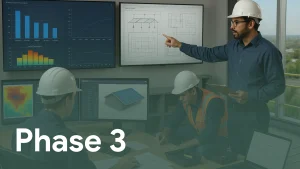
LiDAR Mapping Integration LiDAR (Light Detection and Ranging) technology has revolutionized solar site assessment by providing precise 3D mapping capabilities. LIDAR data is also used to calculate how much irradiance (sunlight) and shading is cast on a rooftop by objects such as trees, chimneys and buildings.
Applications in Solar Assessment:
- Generate accurate 3D models of buildings and surrounding areas
- Calculate precise roof slopes and orientations
- Identify shading sources and their seasonal impact
- Measure tree heights and building obstructions
- Create detailed site maps for system design
Benefits of LiDAR Integration: NREL estimates that remote site assessment has the potential to reduce industry soft costs by $0.17/W. This translates to significant savings across large projects while maintaining accuracy levels.
Important LiDAR Considerations:
- Data recency: LiDAR is not always up to date, with some regions not having been updated since 2017 or prior
- Verify LiDAR data with on-site measurements for critical measurements
- Understand limitations in areas with dense tree coverage
Comprehensive Shading Analysis Shading represents one of the biggest threats to solar system performance. Modern assessment techniques go beyond simple visual inspection.
Advanced Shading Tools:
- Solar pathfinder for precise sun path analysis
- Digital shade analysis software with seasonal modeling
- Drone-based imaging for complex installations
- Time-lapse photography for dynamic shade patterns
Shading Source Identification:
- Nearby buildings and their seasonal shadow patterns
- Mature trees and vegetation growth projections
- Terrain features like hills and ridgelines
- Future development potential in surrounding areas
Performance Impact Calculations:
- Quantify energy losses from identified shading
- Model seasonal variations in shade coverage
- Calculate economic impact of shading on project returns
- Identify mitigation strategies like panel placement optimization
Phase 4: Soil Testing and Geotechnical Analysis

For ground-mounted systems, soil conditions directly impact foundation design and project costs. For example, if there is a large granite slab under the site, the racking costs for the system will be higher than initially estimated.
Essential Soil Testing Methods
Standard Penetration Testing (SPT): Test borings include standard penetration testing (SPT) that provides standardized blow counts or N values. The N values are a measure of the relative density of cohesionless soils (sands) and the relative consistency of cohesive soils (clays).
Cone Penetration Testing (CPT): Provides continuous soil resistance data and helps determine bearing capacity for foundation design.
Geotechnical Investigation Components:
- Soil composition and bearing capacity analysis
- Groundwater level assessment and seasonal variations
- Corrosion potential evaluation for metal foundations
- Frost depth considerations in cold climates
- Seismic activity assessment for structural design
Pull-Out Testing for Solar Applications: Pull-out tests are performed to assess the anchorage or pull-out capacity of the proposed site of the solar farm to ensure the correct foundation or archoring system is selected.
When Soil Testing is Required:
- All utility-scale ground-mounted installations
- Commercial ground-mounted systems over 100kW
- Sites with questionable soil conditions
- Projects requiring engineered foundations
- Installations in areas with known geological challenges
Phase 5: Electrical Infrastructure Assessment

Existing Electrical System Evaluation:
- Main panel capacity and available space
- Service entrance location and upgrade requirements
- Grounding system adequacy
- Electrical code compliance issues
Grid Connection Analysis:
- Utility interconnection requirements
- Transformer capacity and upgrade needs
- Net metering availability and limitations
- Three-phase power availability for commercial projects
Safety and Code Compliance:
- Arc fault circuit interrupter (AFCI) requirements
- Rapid shutdown device placement
- Electrical meter accessibility
- Fire safety setback requirements
Solar Resource and Environmental Analysis
Solar Irradiance Assessment Understanding the solar resource at your site determines system performance potential. The Solar power plant performance relies not only on sunshine but also on accurate weather data since weather conditions directly affect the performance of PV panels.
Data Collection Methods:
- On-site irradiance monitoring for critical projects
- Satellite-based solar resource databases
- Historical weather data analysis
- Seasonal variation modeling
Environmental Impact Considerations:
- Wildlife habitat protection requirements
- Stormwater management planning
- Erosion control measures
- Vegetation management strategies
Advanced Assessment Technologies and Tools
Drone Technology Integration Modern solar assessments increasingly rely on drone technology for comprehensive site analysis:
- High-resolution aerial photography
- Thermal imaging for roof condition assessment
- 3D site mapping and modeling
- Hard-to-reach area inspection
Digital Measurement Tools:
- Laser distance measuring for precision
- Digital inclinometers for roof pitch
- GPS coordinates for system layout
- Mobile apps for data collection and reporting
Software Integration:
- CAD software for system design
- PV simulation software for performance modeling
- Project management platforms for workflow coordination
- Customer presentation tools for proposal development
Cost-Benefit Analysis and Project Viability
Financial Modeling Components:
- System cost estimation based on site conditions
- Performance projections using local weather data
- Incentive and financing option analysis
- Return on investment calculations
Risk Assessment:
- Identification of potential cost overruns
- Timeline risk factors
- Performance risk evaluation
- Long-term maintenance considerations
Common Assessment Pitfalls to Avoid
Inadequate Shading Analysis Many installers underestimate the complexity of shading analysis, leading to performance shortfalls and customer dissatisfaction.
Insufficient Structural Evaluation Skipping detailed structural analysis can result in costly roof reinforcement requirements discovered during installation.
Poor Documentation Incomplete assessment documentation creates problems during permitting, installation, and warranty claims.
Ignoring Future Changes Failing to consider future site changes like tree growth or nearby construction can impact long-term performance.
ROI Impact of Thorough Site Assessment
Companies investing in comprehensive site assessment see measurable returns:
Reduced Project Costs:
- Fewer unexpected site conditions
- Optimized system sizing and placement
- Reduced change orders during installation
Improved Customer Satisfaction:
- More accurate performance predictions
- Fewer post-installation issues
- Enhanced professional credibility
Competitive Advantage:
- Higher proposal accuracy
- Reduced liability exposure
- Improved project margins
Future-Proofing Your Assessment Process
Technology Integration Trends:
- Artificial intelligence for automated analysis
- Machine learning for performance prediction
- Blockchain for assessment data verification
- IoT sensors for ongoing site monitoring
Regulatory Evolution:
- Stricter interconnection requirements
- Enhanced safety standards
- Environmental protection mandates
- Grid modernization requirements
The Perfect Solar Site Assessment: Accurate Assessments. Smarter Installs. Powered by Energyscape.
In solar, precision starts with the site. At Energyscape Renewables, we help US solar installers and EPCs get it right from the ground up. From LiDAR-based mapping to shade analysis and structural evaluations, our expert team and tools ensure every project starts with data you can trust.
With our Sunscape Site Survey App and tailored engineering support, you can move fast, stay accurate, and avoid costly surprises. Better assessments mean better installs—and better business.
Let’s power your next project with confidence.
sjayakanth@energyscaperenewables.com