
When Does a Solar System Need a PE Stamp? Residential vs. Commercial Thresholds Explained

Why PE Stamp Solar Requirements Keep Confusing US Installers and EPCs
Permit rejections hurt. So does paying for a PE stamp you didn’t actually need. PE stamp solar requirements are among the most misunderstood parts of solar permitting for US installers and EPCs. Moreover, the rules shift based on system size, jurisdiction, and project type. As a result, getting it wrong costs both time and money. However, once you know the thresholds, you can plan ahead and avoid costly surprises.
What Is a PE Stamp in Solar Projects?
A PE stamp is the official sign-off from a licensed Professional Engineer. Specifically, it confirms that a solar system’s structural and electrical design meets code. In addition, AHJs use it to verify three things. First, the rooftop array won’t overload the structure. Second, racking is designed for local wind and snow loads. Third, the electrical layout is safe and code-compliant.
Why It Can’t Be Skipped
Without a PE stamp — when one is required — your permit application stalls immediately. For instance, some AHJs hold it indefinitely. Others, on the other hand, reject it outright. Either way, the project stops moving forward.
Residential Solar PE Stamp Thresholds
The General Baseline for Small Systems
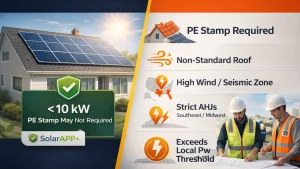
For residential solar, PE stamp rules vary by state and local jurisdiction. Nevertheless, clear patterns do exist. Generally, small residential systems under 10 kW may not require a PE-stamped structural letter. This applies specifically when the racking manufacturer provides a stamped letter covering standard installations. Furthermore, it’s especially common in jurisdictions using SolarAPP+. In those cases, therefore, pre-approved engineering substitutes for project-specific PE review.
When a PE Stamp Becomes Required on Residential Jobs
Certain conditions, however, trigger a required PE stamp even on residential systems. As a result, watch out for these situations:
- Roof age or condition concerns flagged by the AHJ
- Non-standard roofs like tile, flat, or low-slope
- High wind or seismic zones in California, Florida, and the Gulf Coast
- Systems exceeding local thresholds, sometimes as low as 10 kW
Additionally, many AHJs in the Southeast and Midwest require a PE-stamped structural letter by default. This applies regardless of system size. Therefore, knowing your AHJ’s baseline expectation before you submit saves re-submission time and prevents delays.
Commercial Solar PE Stamp Requirements
Ground-Mount Projects: Strict by Default
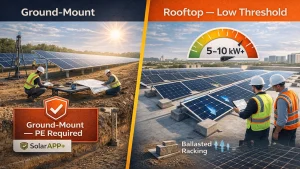
Commercial solar PE stamp requirements are, in general, stricter and more consistent than residential thresholds. For commercial ground-mount systems, consequently, PE-stamped structural and electrical drawings are almost universally required. These projects involve larger load calculations, soil assessments, and structural analysis. As a result, no AHJ will approve a 500 kW ground-mount without a licensed engineer signing off first.
Rooftop Commercial: Lower Threshold Than Ground-Mount
For commercial rooftop solar, most jurisdictions require a PE stamp when the system exceeds 10 kW. In fact, many set the bar at 5 kW for commercial occupancies. Similarly, flat-roof commercial installations almost always require engineering review. Ballasted racking, drainage implications, and roof load distribution all add complexity. Furthermore, for EPCs managing large-scale projects, PE-stamped drawings support more than just permits. They also back interconnection applications, insurance documentation, and O&M handoff packages.
State-by-State Variation: The Factor That Catches Installers Off Guard
No Single National Standard Exists
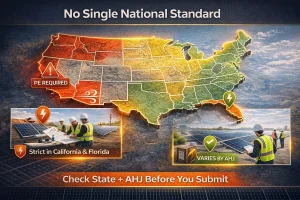
PE stamp requirements don’t follow one national standard. While NEC 2023 and IBC 2021 set baseline frameworks, states and local AHJs layer their own amendments on top. Consequently, what passes in one state may get rejected in another.
Key State Examples to Know
For example, California’s Title 24 and seismic zone classifications push even small residential systems into PE stamp solar territory. Similarly, Florida’s FBC high-wind requirements do the same across much of the state. By contrast, some Midwest AHJs still operate on older code cycles with more lenient thresholds. However, that’s changing steadily as more jurisdictions update to NEC 2023.
The Safest Approach for Your Business
Therefore, the safest move is to build a state-by-state AHJ knowledge base. Alternatively, work with a PE partner who already has one built. Either way, guessing on PE stamp solar requirements compounds risk with every single project you submit.
PE Stamps and Solar Interconnection Applications
What Utilities Expect From Your Submittal
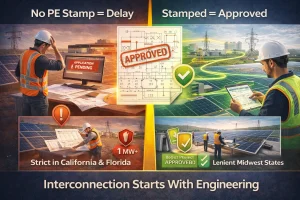
Beyond the building permit, PE-stamped single-line diagrams are standard for utility interconnection applications. Specifically, most utilities require an engineer’s stamp on the electrical design before the application moves to technical review. Without it, the process simply doesn’t advance.
Large Commercial and Industrial Projects
For projects above 1 MW, moreover, utilities typically expect a full stamped drawing set. This covers structural, electrical, and civil design together. Consequently, submitting without them delays the interconnection queue significantly. In today’s constrained grid environment, therefore, that delay can easily mean months of lost time and revenue.
How EnergyScape Renewables Supports Your PE Stamp Needs
This is precisely where EnergyScape Renewables takes complexity off your plate entirely. EnergyScape specializes in PE stamp solar plan sets for installations across all 50 states. In addition, their engineering team covers both residential and commercial projects. As a result, they understand AHJ-specific requirements, local code amendments, and utility interconnection standards inside and out.
Fast Turnaround. Clean Permit Packages.
Above all, turnaround is fast. Permit applications go out complete and accurate. Consequently, projects stay on schedule without last-minute re-submissions. Whether you’re running residential installs or managing a commercial EPC pipeline, furthermore, EnergyScape’s PE stamping services scale with your workload seamlessly. Visit energyscaperenewables.com to learn more about their engineering and plan set services.
Also, if you’re looking to streamline project management alongside your permitting workflow, check out Sunscape Solar — a CRM and project management platform built specifically for US solar installers and EPCs.
Final Takeaway on PE Stamp Solar Compliance
In summary, knowing PE stamp solar thresholds is a genuine competitive edge. Installers who understand when a stamp is required consistently submit cleaner permit packages. As a result, they win AHJ approvals on the first try. They also keep project timelines tight and avoid costly delays. Therefore, whether you’re working residential rooftops or large commercial ground-mounts, the right PE stamping process removes one more variable slowing your business down
sjayakanth@energyscaperenewables.com