
One Big Beautiful Bill Solar Impact: EPC & Installer Guide 2025

Solar Industry Alert: One Big Beautiful Bill Impact on Installers & EPCs
The One Big Beautiful Bill solar industry impact creates immediate opportunities and long-term challenges for solar installers and EPCs, with the 30% residential solar tax credit terminating December 31, 2025, and accelerated commercial solar incentive phase-outs reshaping the entire renewable energy market.
What Is the One Big Beautiful Bill and How Does It Impact Solar Installers?
The One Big Beautiful Bill solar industry transformation represents the most significant policy shift since the Inflation Reduction Act of 2022. For solar installers and Engineering, Procurement, and Construction (EPC) companies across America, this legislation fundamentally alters the market dynamics that have driven unprecedented growth in solar installations.
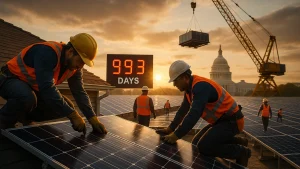
The One Big Beautiful Bill act makes sweeping changes to U.S. clean energy industrial policy, including repealing the investment tax credit and production tax credit for solar and wind projects several years ahead of schedule. This creates an unprecedented situation where immediate demand surges while long-term prospects face uncertainty.
Key Question: What does this mean for my solar installation business right now?
Direct Answer: You have until December 31, 2025, to complete residential solar installations for customers to claim the 30% federal tax credit, creating a six-month rush period followed by a dramatically different market landscape.
Critical Timeline Changes Every Solar Installer Must Know
When Does the Residential Solar Tax Credit End?
With this latest draft, we’re back to a December 31, 2025 deadline to have residential solar systems installed in order for the homeowner to claim a 30% solar tax credit. Unlike commercial projects, there’s no “commence construction” provision for residential installations—systems must be completely operational by year-end.
FAQ: Can customers still get the tax credit if they sign a contract in 2025 but install in 2026? Answer: No. The system must be fully installed and operational (placed in service) by December 31, 2025. Contract signing dates don’t matter.
Commercial Solar Project Requirements: The Safe Harbor Provision
For EPC companies handling commercial solar projects, the timeline involves complex safe harbor requirements:
- 60-Day Construction Start Requirement: All projects must start construction within 60 days of the bill becoming law (calendar days, not business days). The only way to meet this is by “safe harboring,” which means investing at least 5% of the project cost in hardware.
- 2028 Completion Deadline: Projects meeting safe harbor requirements have until December 31, 2028, to complete installation.
- Foreign Entity Restrictions: There is a 100% FEOC requirement. This means the materials for your system can not come from or be manufactured by a company with ownership in a foreign country of concern.
Economic Impact Analysis: What Solar Installers Can Expect
How Will This Affect Solar Installation Jobs?
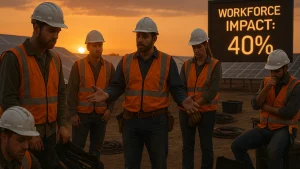
The workforce impact is immediate and significant. Now, Etheridge says losing the tax credit will likely mean laying off 50 to 55 of his workers. This example from Southern Energy Management illustrates broader industry challenges.
Statistical Reality Check:
- Wood Mackenzie forecasts a possible 40% decline in residential solar installations by 2026 if the ITC is removed, with thousands of associated job losses.
- Residential solar installers constitute a significant portion of the solar workforce, employing over 250,000 people nationwide.
- The Department of Treasury said IRA investments are expected to support 1.5 million jobs over the next decade, based on analysis by the Labor Energy Partnership.
Solar Installation Economics: The New Math
Case Study: Typical Residential Installation
Before One Big Beautiful Bill:
- System Cost: $43,890
- After 30% Tax Credit: $30,723
- Payback Period: 11 years
- ROI: 10.64%
After One Big Beautiful Bill:
- System Cost: $43,890 (no tax credit)
- Net Cost: $43,890
- Payback Period: 16 years
- ROI: 7.45%
This fundamental shift in solar economics creates both pricing pressure and market opportunities for prepared installers.
Strategic Opportunities in the Changing Solar Market
Why the Next Six Months Are Critical for Solar Installers
Now is absolutely the best time to go solar and lock in your maximum savings potential, as waiting can expose your project to longer installation timelines, limited equipment choices, higher prices, and missing out on tax credit eligibility altogether.

Immediate Revenue Acceleration Strategies:
- Scale Installation Capacity: Companies that can handle increased volume will capture disproportionate market share
- Secure Equipment Inventory: Supply chain constraints will intensify as demand surges
- Premium Pricing Power: Limited installer capacity allows for higher margins during the rush period
- Customer Education Campaigns: Inform customers about the December 31 deadline to accelerate sales cycles
Business Model Diversification for Solar EPCs
Forward-thinking solar companies are adapting beyond traditional installation services. He said he’ll scramble now to figure out ways to diversify his business.
Diversification Opportunities:
- Energy Storage Systems: Battery storage follows different incentive timelines
- Commercial Energy Efficiency: Expand into comprehensive energy services
- Operations & Maintenance: Build recurring revenue from existing installations
- Grid Modernization: Participate in utility-scale infrastructure projects
- Electric Vehicle Charging: Capitalize on growing EV adoption
Regional Market Analysis: Where Solar Installers Should Focus
Geographic Impact Variations
With roughly 80% of the private investment announcements spurred by the Inflation Reduction Act (IRA) of 2022 having occurred in Republican districts, much is at stake. This creates interesting political dynamics as constituents experience economic impacts firsthand.
High-Opportunity Markets for Solar Installers:
- States with strong net metering policies
- Regions with high electricity rates
- Areas with additional state solar incentives
- Markets with supportive utility programs
Market Positioning Strategy: Evaluate geographic focus and consider strategic expansion to more favorable state markets with robust renewable energy policies.
Solar Equipment and Supply Chain Strategy
Navigating Foreign Entity of Concern (FEOC) Restrictions
The FEOC requirements reshape equipment sourcing for solar installers. Projects that use components from FEOC-controlled or influenced companies lose access to the tax credit (under 48E) retroactive to June 16, 2025.

Supply Chain Compliance Checklist:
- Audit current equipment suppliers for FEOC compliance
- Establish relationships with domestic manufacturers
- Evaluate component sourcing from allied nations
- Document supply chain compliance for customer verification
Solar Financing Model Transformation
It terminates tax credits for companies like Sunrun that lease solar equipment to customers. About 70% of the residential solar industry is using lease arrangements.
Alternative Financing Strategies:
- Direct Customer Financing: Partner with solar loan providers
- Modified PPA Structures: Adapt power purchase agreements for new economics
- Cash Sale Expertise: Train teams on cash transaction advantages
- Extended Payment Terms: Offer customer-friendly payment options
Market Outlook and Strategic Planning
Short-Term Action Plan (Q3-Q4 2025)
Immediate Priorities for Solar Installers:
- Scale installation capacity to capture pre-deadline demand
- Secure equipment inventory for December 2025 installations
- Streamline permitting and installation processes
- Develop expertise in cash sales and alternative financing
- Train sales teams on new economic calculations
Medium-Term Strategy (2026-2028)
Business Evolution Priorities:
- Diversify service offerings beyond solar installation
- Build strategic partnerships with energy service providers
- Develop expertise in remaining incentive programs
- Invest in operational efficiency for lower-margin environment
- Consider geographic expansion to favorable markets
Long-Term Positioning (2028+)
The solar industry continues growing, but with different drivers. Companies positioning themselves as comprehensive energy service providers will thrive in the post-incentive environment.
Regulatory Compliance for Solar Professionals
Safe Harbor Documentation Requirements
For EPC companies pursuing safe harbor provisions, strict compliance protocols are essential:
Documentation Checklist:
- Purchase orders showing 5% equipment investment
- Delivery receipts with timestamps
- Payment verification
- Construction commencement evidence
- FEOC compliance certificates
Understanding Tax Credit Transferability
During taxable year 2024, it is estimated that tax credits in excess of $25 billion were sold pursuant to these rules. Repealing this monetization alternative will require developers and sponsors to rely mainly on the tax equity financing, which was a market historically capped at approximately $20 billion.
One Deadline. One Partner. Every Service—Energyscape Renewables
The One Big Beautiful Bill has changed the rules—but not the opportunity. As the clock ticks down on the 30% tax credit, EPCs and installers need speed, precision, and a trusted partner more than ever.
Energyscape Renewables delivers everything under one roof—solar engineering, plan sets, permitting, PE stamping, and interconnection—all done right, right when you need it. And with the Sunscape Site Survey App and CRM, we help you move from design to delivery faster than ever.
When the market shifts, the strongest teams don’t just adapt—they lead. Energyscape is here to help you do exactly that.
One Big Beautiful Bill: Frequently Asked Questions for Solar Installers
Q: Can we still sell solar systems after December 31, 2025? A: Yes, but customers won’t receive federal tax credits, making sales more challenging and requiring different value propositions.
Q: What happens to existing solar installation contracts? A: Contracts signed before the deadline are valid, but systems must be installed by December 31, 2025, for tax credit eligibility.
Q: Should we raise prices before the deadline? A: Market conditions support premium pricing due to capacity constraints and deadline pressure, but balance this with customer relationships.
Q: How do FEOC restrictions affect equipment purchasing? A: Review all suppliers for foreign entity connections and establish compliant supply chains before restrictions tighten.
Q: What state incentives remain available? A: State programs vary significantly—research local incentives, net metering policies, and utility programs in your markets.
sjayakanth@energyscaperenewables.com