
Hurricane Zone Solar Installation: Complete Guide For 2026

Hurricane Zone Solar Installation: Engineering Requirements That Keep Coastal Systems Standing
Hurricane zone solar installation presents unique challenges that standard projects don’t face. If you’re installing solar panels along the Atlantic or Gulf coasts, understanding specialized engineering requirements isn’t optional—it’s the difference between systems that survive and installations that fail when the next storm hits.
Coastal regions offer tremendous solar potential. However, these same areas face Category 4 hurricanes with 160+ mph winds. Consequently, installers need engineering expertise that goes far beyond typical residential projects.
Why Hurricane Zone Solar Installation Demands Special Engineering
Standard building codes require solar systems to withstand 90 mph winds in most US regions. In contrast, Florida’s hurricane zones mandate systems that survive 160 mph winds—nearly double the standard requirement.
The physics behind this difference matters significantly. Wind creates two primary forces on solar arrays: direct pressure and uplift. Moreover, air flowing between roof surfaces and panels generates suction forces that try to rip systems from their mounts.
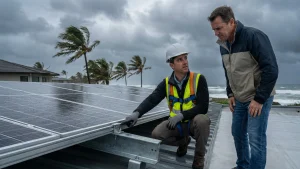
These uplift forces are measured in pascals (Pa). While typical solar panels withstand 2,400 Pa (approximately 140 mph), Florida regulations demand 3,300 Pa tolerance. This 37% increase in wind resistance requires completely different engineering approaches.
Real-World Hurricane Performance Data
Recent storms provide compelling evidence. For instance, Hurricane Maria hit Puerto Rico in 2017 with 180 mph winds. A 645-kilowatt hospital solar array continued operating at 100% capacity throughout the storm. The key? Properly engineered flexible racking systems and professional installation.
Similarly, Hurricane Ian struck Babcock Ranch, Florida in 2022. Despite powering the community with 700,000+ solar panels, the installation suffered minimal damage. Meanwhile, surrounding structures experienced significant destruction.
According to the National Renewable Energy Laboratory (NREL), only 0.1% of 50,000 studied solar systems reported damage annually. This data spans installations from 2009-2013, covering multiple major hurricane seasons. Source: NREL Solar System Performance Study
Understanding ASCE 7-16 Wind Load Requirements
The American Society of Civil Engineers Standard 7-16 (ASCE 7-16) provides the foundation for all wind load calculations. Furthermore, this standard determines mounting system design based on specific site factors.
Wind Exposure Categories Explained
Your installation site falls into one of three exposure categories:
Exposure B includes urban and suburban areas with closely spaced buildings. These locations experience reduced wind speeds due to surrounding structures.
Exposure C covers open terrain with scattered obstructions. Most coastal residential areas fall into this category, requiring moderate wind resistance measures.
Exposure D represents the most demanding classification. These flat, unobstructed areas face wind flowing over open water for at least one mile. Consequently, beachfront properties and coastal commercial buildings need maximum wind protection.
Critical Roof Zones and Attachment Spacing
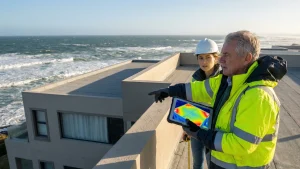
Not all roof areas face equal wind pressure. Specifically, edges and corners experience 40-60% higher uplift forces than center sections.
Smart installers avoid placing arrays in these high-stress zones when possible. However, when edge placement is unavoidable, they reduce attachment spacing by 30-50%. This compensation prevents panel uplift during extreme weather events.
Additionally, building height affects wind load calculations. Structures under 60 feet face different pressures than taller buildings. Therefore, accurate site assessment becomes critical before design begins.
Florida Building Code and HVHZ Compliance Requirements
Florida’s High Velocity Hurricane Zone (HVHZ) includes Broward and Miami-Dade Counties. These regions enforce the nation’s strictest solar installation requirements.
Product Approval Requirements
HVHZ installations require either a statewide Florida Product Approval or a Miami-Dade Notice of Acceptance (NOA). These certifications verify that mounting systems have passed rigorous wind tunnel testing.
Without proper product approvals, permit applications face immediate rejection. Moreover, Miami-Dade County’s 36 municipalities each maintain separate building departments. This complexity makes pre-approved products essential for timely project completion.
Product approval processes typically take 2-6 months. Therefore, using pre-certified mounting systems eliminates this delay entirely.
PE Stamping: Your Non-Negotiable Requirement
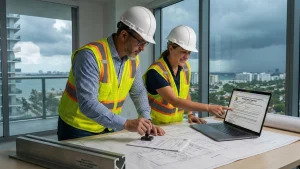
Professional Engineering (PE) stamps aren’t suggestions in hurricane zones—they’re mandatory for permit approval. A licensed PE must review and certify both structural and electrical designs.
Structural PE stamps verify:
- Roof load capacity calculations
- Wind uplift resistance design
- Mounting system integrity
- Waterproofing at penetration points
- Material specifications for coastal environments
Electrical PE stamps confirm:
- National Electrical Code (NEC) compliance
- Proper grounding systems
- Junction box weatherproofing
- Moisture infiltration prevention
Many experienced engineering firms now offer 24-hour PE stamping turnaround. This rapid service keeps projects moving during peak installation seasons. Learn about professional solar PE stamping services
Complete guide to PE stamp requirements by state
Selecting Hurricane-Resistant Mounting Systems
Material selection separates successful installations from catastrophic failures. Coastal environments demand corrosion-resistant materials that maintain structural integrity for 25+ years.
Material Considerations for Coastal Installations
Stainless steel mounting systems provide superior strength and corrosion resistance. Grade 316 stainless steel, specifically, withstands salt spray without degradation.
Marine-grade aluminum offers excellent corrosion resistance with lighter weight. However, it requires proper anodizing or coating for maximum longevity.
Standard galvanized steel corrodes rapidly in coastal environments. Therefore, avoid it entirely for hurricane zone installations.
Attachment Techniques That Actually Work
Through-bolt systems significantly outperform top-down clamping mechanisms. In fact, through-bolting provides 2-3 times the pullout resistance of standard clamps.
For composition shingle roofs, attachments must connect directly to rafters—never to decking alone. Many experienced installers use L-brackets accommodating two lag bolts instead of one. This seemingly small change doubles holding strength.
Additionally, lag bolts should penetrate at least 3 inches into roof trusses. Testing shows that this depth provides 756 pounds of uplift resistance per attachment point.
Standing-seam metal roofs require specialized clamps that lock into seams without creating penetrations. This approach maintains roof waterproofing while providing secure panel attachment.
ASCE 7-16 wind load calculation guidelines
Aerodynamic Design Innovations
Modern mounting systems incorporate wind-reducing features. For example, bullnose fairings reduce leading-edge wind separation by 40-50%.
Boattail designs with 14-degree closure angles minimize drag forces. Furthermore, strategic panel placement reduces overall uplift by positioning arrays in lower-pressure roof zones.
These aerodynamic improvements reduce wind loads by up to 80% compared to standard mounting configurations. Consequently, they provide substantial safety margins during extreme weather.
2024 International Building Code Updates
The 2024 IBC revision elevates solar facilities from Risk Category 1 to Risk Category 2. This change increases load factors by approximately 15%.
Practically speaking, components must now withstand 145-150 mph winds versus the previous 135 mph standard. While this adds 1-5% to project costs, it significantly improves system resilience.
Quality Control and Installation Best Practices
Installation teams need strict protocols to ensure hurricane readiness. Critical inspection points include:
- Torque verification on all fasteners using calibrated tools
- Sealant application at every roof penetration
- Rail alignment within 1/8-inch tolerance
- Grounding connections meeting NEC Article 690
- Attachment spacing matching engineering specifications exactly
Additionally, pre-storm maintenance protocols protect long-term investments. Specifically, annual inspections should verify mounting hardware tightness, check cabinet seals, secure loose wiring, and confirm drainage system functionality.
Permitting Strategies for Hurricane Zones
Successful permitting requires complete documentation upfront. Gather these materials before submission:
- Accurate site assessment reports
- Detailed structural calculations
- Roof condition documentation
- Manufacturer wind rating specifications
- Electrical diagrams meeting NEC standards
- PE-stamped engineering plans
Miami-Dade County permitting can take anywhere from one week to several months. However, using NOA-approved products and complete documentation typically achieves 2-4 week approval times.
What Hurricane Zone Solar Installation Means for Your Business
Coastal solar markets represent tremendous opportunity. However, success requires demonstrating engineering competency that sets you apart from competitors.
Homeowners increasingly research wind ratings and PE stamp requirements before selecting installers. Therefore, your ability to explain engineering details becomes a competitive advantage.
Premium pricing is justified when clients understand the additional engineering, materials, and expertise required for hurricane-resistant systems. Moreover, successful installations during major storms provide invaluable word-of-mouth marketing.
Building Long-Term Customer Relationships
Systems that survive hurricanes create customer loyalty lasting decades. Furthermore, satisfied clients in hurricane zones actively refer installers who got their engineering right.
Your reputation ultimately becomes your most valuable business asset in coastal markets.
Taking Action on Your Hurricane Zone Projects
Don’t let complex engineering requirements slow your coastal expansion. Start by partnering with experienced engineering firms that understand HVHZ requirements.
Look for providers offering:
- Licensed PEs in all 50 states
- Rapid 24-hour stamping turnaround
- ASCE 7-16 calculation expertise
- Florida Building Code compliance
- Complete permit package preparation
Additionally, invest in CRM systems designed for solar project management. Proper coordination between sales, engineering, permitting, and installation teams prevents costly delays.
Get Hurricane Zone Engineering Support Today
EnergyScape Renewables delivers end-to-end solar engineering specifically designed for hurricane zone solar installation. Our licensed Professional Engineers provide permit-ready plan sets with 24-hour PE stamping across all 50 states.
We handle structural and electrical stamps, Arc-Calcs, Load Calcs, and complete HVHZ-compliant permit packages. Our expertise in ASCE 7-16 wind calculations and Florida Building Code requirements ensures your coastal projects pass AHJ inspection on first submission.
Visit EnergyScape Renewables to learn how our overnight engineering keeps your projects on schedule.
Coordinate your entire project workflow with Sunscape Solar—the CRM platform connecting your sales, design, permitting, and field teams. Capture accurate site data, automate workflows, and maintain customer communication throughout installation.
Start at Sunscape Solar to transform your coastal installation business. Contact us at +1 855-263-0700 or email us at info@energyscaperenewables.com
sjayakanth@energyscaperenewables.com