
How Automated Solar Proposals Are Helping Small Installers Compete with National Players

How Small Solar Installers Compete Against National Giants
Small solar installers across America face a massive challenge: how do you compete when national companies have deep pockets, huge marketing budgets, and established brand recognition? The answer isn’t trying to outspend them—it’s outsmarting them with technology. Automated solar proposals are leveling the playing field, giving small installers the tools to close deals faster, reduce overhead costs, and deliver the professional experience customers expect. This shift is transforming how residential solar companies operate, making speed and precision the new competitive advantages.
The Growing Divide Between Small and National Solar Companies
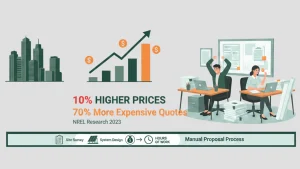
National solar companies like Sunrun, Tesla Solar, and Sunnova dominate market share through massive advertising campaigns and coast-to-coast operations. However, research from the National Renewable Energy Laboratory reveals something surprising: these giants charge about 10% more on average than local installers. Moreover, they quote higher prices roughly 70% of the time compared to smaller competitors.
Despite these pricing advantages, small solar installers struggle to compete because they lack the operational efficiency and sales infrastructure that national players have built over years. Traditional proposal creation takes hours of manual work, from site surveys to system design to financial modeling. For a team of two or three people, this bottleneck kills momentum and limits growth.
How Automated Solar Proposals Transform the Sales Process
The introduction of automated solar proposal software has fundamentally changed what’s possible for small solar installers. Instead of spending days creating custom proposals, installers can now generate professional, accurate quotes in minutes. This technology handles everything from 3D roof modeling to production estimates to financial analysis.
Furthermore, automated solar proposals eliminate the common errors that plague manual processes. When solar EPCs use these platforms, they drastically reduce change orders, avoid costly redesigns, and maintain profitability on every project. The software integrates real-time data on equipment costs, utility rates, and available incentives to ensure accuracy.
What makes this particularly powerful is the speed advantage it creates. Sales representatives can now sit with homeowners and generate customized proposals during the initial meeting. This eliminates the dreaded “second appointment” where prospects often go cold or get scooped by faster competitors. Meanwhile, the professional presentation quality rivals anything national companies produce.
The Technology Powering Modern Solar Sales
Today’s automated solar proposals leverage artificial intelligence and advanced algorithms to streamline design workflows. These platforms use HD satellite imagery, LiDAR data, and AI-assisted 3D modeling to create accurate roof representations without requiring installers to climb every roof.
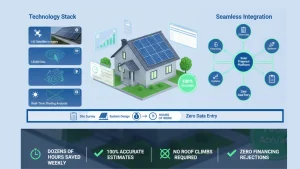
The shading analysis capabilities have become remarkably sophisticated. Rather than relying on outdated satellite imagery, leading solutions integrate real-time shade data that accurately predicts system performance. This precision helps solar installers avoid the financing rejections that occur when production estimates don’t match reality.
Additionally, modern solar proposal software connects seamlessly with financing partners, CRMs, and permitting systems. This integration eliminates redundant data entry and keeps the entire sales-to-installation pipeline moving smoothly. For small teams, this automation recovers dozens of hours each week that can be redirected toward actual sales activities.
Competing on Quality and Customer Experience
Small solar installers have always had one major advantage over national companies: personalized service and local expertise. However, clunky manual processes often prevented them from showcasing this strength effectively. Automated solar proposals amplify what small installers do best.
With instant proposal generation, local solar companies can focus on educating customers rather than rushing through appointments. They can explore multiple system configurations, answer questions in depth, and build genuine relationships. National companies typically use high-pressure sales tactics and scripted pitches—small installers can differentiate by being consultative and transparent.
Moreover, customers increasingly value working with local businesses that understand regional incentives, utility policies, and permitting requirements. When small installers pair this local knowledge with cutting-edge technology, they become formidable competitors regardless of company size.
Reducing Costs While Scaling Operations
Traditional solar proposal tools often charge $30 or more per proposal, with additional fees for revisions and advanced features. These costs add up quickly, especially for growing businesses. Fortunately, newer automated solar proposals platforms have disrupted this pricing model dramatically.

Some solutions now offer proposals starting at under $10, with volume discounts driving costs even lower. This pricing structure removes the financial barrier that previously prevented small solar installers from accessing enterprise-grade tools. The savings go straight to the bottom line or can be invested in marketing and business development.
Beyond direct software costs, automation reduces the need for large design teams. A single designer equipped with automated solar proposals can handle the workload that previously required three or four people. This efficiency enables small solar EPCs to grow revenue without proportionally increasing headcount.
EnergyScape Renewables: Your Partner in Solar Success
Navigating the solar industry’s technology landscape can feel overwhelming. That’s where EnergyScape Renewables comes in. As a full-service solar engineering firm, we provide the expertise and support that help installers and EPCs thrive in today’s competitive market.
Our team specializes in PE stamping, permitting services, and comprehensive solar design solutions. We understand that small solar installers need partners who can move fast and deliver exceptional quality—that’s exactly what we provide. Whether you’re handling residential projects or commercial installations, EnergyScape Renewables ensures your designs meet all code requirements and pass inspections the first time.
Leveraging Artemis and Scanifly for Automated Sales Proposals
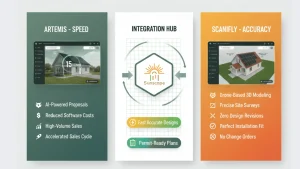
At EnergyScape Renewables, we utilize industry-leading platforms to deliver automated sales proposal services that keep our clients competitive. Specifically, we work with Artemis and Scanifly—two platforms that have revolutionized solar sales and design workflows.
Artemis excels at generating instant, AI-powered proposals that can be created in under 15 seconds. The platform dramatically reduces software costs while accelerating the sales cycle, making it perfect for high-volume solar sales operations. Scanifly, on the other hand, provides drone-based 3D modeling and precise site surveys that eliminate design revisions. Their technology ensures systems fit perfectly on installation day, preventing costly change orders.
By combining these powerful tools with our engineering expertise, EnergyScape Renewables with help of Sunscape delivers the complete package: fast proposals, accurate designs, and permit-ready plan sets. This integrated approach helps small solar installers compete effectively without building expensive in-house capabilities.
The Future Belongs to Agile Solar Companies
The solar industry continues evolving rapidly, with policy changes, technology advances, and shifting customer expectations. Small solar installers who embrace automated solar proposals position themselves to adapt quickly and capitalize on opportunities. National companies, burdened by bureaucracy and legacy systems, often struggle to pivot effectively.

Looking ahead to 2026 and beyond, successful solar businesses will be those that combine operational efficiency with authentic customer relationships. Automated solar proposals provide the efficiency; dedicated small teams provide the personal touch. This combination creates sustainable competitive advantages that no amount of marketing dollars can overcome.
For more information about optimizing your solar business operations, explore the resources available at Sunscape, where you’ll find tools and insights designed specifically for solar professionals.
Taking the Next Step
The technology gap between small solar installers and national players has essentially disappeared. Automated solar proposals democratize access to tools that were once exclusive to large companies with massive IT budgets. Now, what matters most is execution—how quickly you implement these solutions and how effectively you use them.
Small solar installers who act decisively will find themselves not just surviving but thriving against national competition. The combination of advanced technology, local expertise, and personalized service creates a value proposition that resonates strongly with today’s solar customers.
sjayakanth@energyscaperenewables.com