
AHJ Permit Requirements: Template-Per-AHJ Playbook 2026
Treating Permitting as a System, Not a Scramble: The Template-Per-AHJ Playbook in 2026
AHJ permit requirements change from one county line to the next, yet most solar installers still track them from memory. Ask a permit coordinator which jurisdiction gives them the most grief, and you’ll get an answer in three seconds. Ask where that knowledge is written down, and you’ll usually get a shrug.
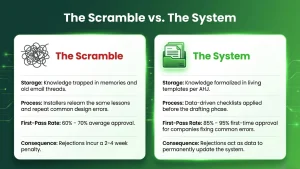
That’s the real problem. The rules live in people’s heads, old email threads, and sticky notes on someone’s monitor. So when that person goes on vacation or quits, your first-pass approval rate leaves with them.
This playbook shows you how to turn permitting into a system: one living template per jurisdiction, updated every time a plan checker sends a redline.
Key Takeaways
- Most of your permit volume comes from a short list of AHJs, so template those first.
- Each template captures code edition, fire setbacks, stamp rules, submittal path, and local quirks.
- Every rejection updates the template, so the same mistake never happens twice.
- Instant permitting rewards clean inputs. It doesn’t replace templates.
- Many TPO projects now face a December 31, 2027 placed-in-service deadline, which turns rework days into risk days.
Why AHJ Permit Requirements Still Feel Like a Scramble
There’s no national rulebook for solar permits. Industry sources count more than 18,000 AHJs, while a Berkeley Lab analysis puts the figure closer to 23,000. In other words, nobody agrees on the exact number.
The differences also show up in the details plan checkers care about most. For example, some AHJs require PE-stamped structural or electrical documents. States adopt new NEC editions on different schedules, and some building departments add rules that have nothing to do with state code.
As a result, installers relearn the same lessons over and over. One permit-services firm reports that companies fixing common design errors reach 85% to 95% first-time approval. The industry average is 60% to 70%, and each rejection adds two to four weeks to the job.
If that sounds familiar, our breakdown of the top 7 causes of solar permit delays shows where those weeks go.

What Is a Template-Per-AHJ System?
A template-per-AHJ system is a documented, reusable checklist of the AHJ permit requirements a specific jurisdiction enforces. Your team applies it to every job in that jurisdiction and updates it after every rejection. It turns tribal knowledge into a company asset.
Think of it as a recipe card for each building department. Your designer doesn’t guess what the county wants. Instead, they open the card.
What Goes Into an AHJ Permit Requirements Template
| Field | What to Capture |
|---|---|
| Code editions | NEC, IRC/IBC, and IFC editions, plus local amendments |
| Fire setbacks | Ridge, hip, valley, and pathway rules |
| Structural | PE stamp triggers, wind and snow loads, attachment details |
| Electrical | Rapid shutdown, labeling, disconnect location, panel upgrade rules |
| Sheet format | Sheet size, title block, required sheets, spec sheets |
| Submittal path | Online portal, SolarAPP+, email, or in person |
| Fees and timing | Permit fees, review time, resubmittal fees |
| Inspection notes | Required inspections, roof access, common inspector asks |
| Redline log | Every past comment and how you resolved it |
The redline log matters most, because it’s where the system learns. Not sure which code edition to enter? Check our 50-state NEC edition map for solar. For stamp triggers, see our guide to residential solar PE stamps.
How to Build Your AHJ Permit Templates in 5 Steps
- Rank your AHJs by volume. Pull the last 12 months of permits and sort them by jurisdiction. Most regional installers find that a small group of AHJs covers the majority of their jobs.
- Pull the official rules. Check each AHJ’s website, submittal checklist, and adopted code ordinance. If something is unclear, call the building department and note who you spoke with.
- Mine your redlines. Next, go through past rejections for that AHJ. Every comment becomes a line item. Our guide to reading an AHJ redline explains how to sort comments by type.
- Bake it into design. Your designer should apply the template before drafting the plan set, not after. Then pre-submission QC checks the set against the template line by line.
- Close the loop. When a redline comes back, log the reason, fix the job, and update the template that same day. Also review your top templates every quarter and whenever an AHJ adopts a new code edition.
This approach works in the field, too. A 2026 OpenSolar review of high-performing EPCs credited standardized templates and pre-submission checks for first-submission approval rates above 90%.
Does Instant Permitting Make an AHJ Permit Template Obsolete?
No. In fact, it makes the template more valuable.
SolarAPP+ keeps growing. Third-party tracking showed it in more than 500 jurisdictions across 17 states by December 2025. Arizona also required its cities and counties to adopt instant online permitting for home solar by January 1, 2026.
What We See Across Our Top AHJs
Why 2026 Raises the Stakes for Solar Permits
Three things changed this year.
The federal clock. With Section 25D gone, more residential deals now run through leases and PPAs under Section 48E. Projects that began construction after July 4, 2026 only earn the credit if they’re placed in service by December 31, 2027. So every rejection loop eats into that window.
Tighter volume. Residential installs hit 995 MWdc in Q2 2026, down 12% year over year. With fewer jobs on the board, rework hurts more, and hiring your way out isn’t an option.
Code churn. NEC 2026 adoption is rolling out unevenly across states. Because of that, AHJ permit requirements keep shifting, and the code edition field on your template is a moving target. A stale template is almost as risky as no template at all.
Stop Scrambling. Start Running a System.
Energyscape Renewables already runs permitting this way across all 50 states. Our AHJ & Utility Database tracks AHJ permit requirements and feeds every plan set, so your packages go out built to each jurisdiction’s rules. You also get 24-hour PE stamping, permit submission, AHJ follow-ups, interconnection, and PTO support. That’s how we’ve completed 280,062 projects with a 99% AHJ and utility approval rate.

Sunscape, Your Solar OS, is where the loop closes. Track every permit by AHJ, log every redline, and spot where jobs stall. You’ll also see your first-pass approval rate by jurisdiction, from lead to PTO.
👉 Get permit-ready plan sets built to each AHJ’s rules →
👉 See your whole permitting pipeline in one place: book a Sunscape demo →
Frequently Asked Questions
What are AHJ permit requirements for solar?
AHJ permit requirements are the local rules a building department enforces before it issues a solar permit. They cover code editions, fire setbacks, structural and electrical documents, sheet formats, fees, and inspections. They vary by jurisdiction.
How many AHJ permit templates should a solar installer build?
Start with your top 10 to 20 jurisdictions by permit volume. Then add new templates as you expand into new markets.
How often should you update AHJ permit requirements in your templates?
Update them after every redline, during a quarterly review, and whenever an AHJ adopts a new code edition.
Can a design partner maintain AHJ templates for me?
Yes. Engineering partners that work across many jurisdictions often keep their own AHJ and utility databases. That way, you don’t have to build every template from scratch.
sjayakanth@energyscaperenewables.com