
Structural PE Stamp Solar: When You Need In 2026

Structural PE Stamp for Solar vs. Electrical PE Stamp: When You Need Each — And What Happens If You Get It Wrong
Your permit package is ready. The client expects a start date. Then, two weeks later, the AHJ sends everything back rejected. The reason? You submitted the wrong PE stamp. Maybe you sent a structural PE stamp for solar when the job needed an electrical one. Or the AHJ required both, and you only sent one.
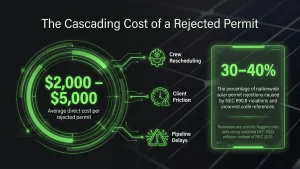
This scenario plays out across the US every single day. It costs solar installers and EPCs between $2,000 and $5,000 per rejected permit — before you even factor in crew rescheduling and client calls. (Source: EnergyScape Renewables, 2026)
However, the good news is this: most PE stamp rejections are completely avoidable. You just need to know which stamp fits which job — and when you need both.
Structural PE Stamp for Solar vs. Electrical PE Stamp: Two Very Different Reviews
A lot of installers treat “PE stamp” as a catch-all term. However, structural and electrical are two separate disciplines — reviewed by two different licensed engineers.
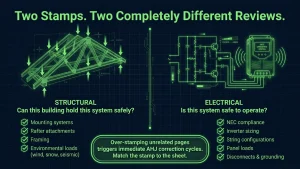
A structural PE stamp means a licensed structural engineer reviewed your mounting system, rafter attachment points, roof framing, and environmental load calculations — specifically wind, snow, and seismic loads for that location. In short, it answers: can this building hold this system safely?
An electrical PE stamp, on the other hand, means a licensed electrical engineer reviewed your design against the National Electrical Code (NEC) — inverter sizing, string configurations, panel load calculations, disconnect requirements, and grounding. Therefore, it answers: is this system safe to operate?
These are two completely separate reviews. Submitting one in place of the other doesn’t just delay your permit. It also tells the AHJ reviewer you didn’t read their submittal checklist — and that impression sticks.
For a full cost breakdown, see our guide on Solar PE Stamp Costs: In-House vs. Outsourcing in 2026.
When You Need a Structural PE Stamp for Solar
Most AHJs require a structural PE stamp for solar whenever a system goes on a rooftop. Specifically, expect to need one when:
- The system exceeds the AHJ’s size threshold — commonly 10 kW for rooftop systems
- The building sits in a high-wind, high-snow, or seismic zone
- The roof uses non-standard framing or is older than a set age threshold
- Any structural modification — like rafter reinforcement — is involved
For instance, California requires a structural stamp on residential rooftop systems above 10 kW. Florida, moreover, mandates structural review on virtually every installation. Wind uplift calculations are non-negotiable there — not because of paperwork, but because of hurricanes. HVHZ markets like Miami-Dade add NOA documentation requirements on top of that.
When You Need an Electrical PE Stamp for Solar
Electrical PE stamps generally kick in based on system output, project type, and local AHJ rules. Plan for one when:
- Output exceeds 50 kW (California’s statewide electrical stamp threshold)
- The design is three-phase commercial
- Battery storage, EV charging, or a service entrance upgrade is involved
- The AHJ requires it regardless of system size — some do
Furthermore, NEC 2026 enforcement is tightening right now across multiple states. Electrical PE reviewers are actively flagging plan sets that still cite NEC 2023 editions. As a result, installers using outdated templates face rejection even on otherwise clean designs. Battery storage projects also now require separate PE-stamped layout diagrams with NEC 706 references alongside NEC 690 — a requirement that catches residential teams off guard regularly.
When You Need Both — And This Is Where Most EPCs Go Wrong
Here’s the truth: multi-state EPCs trip up the most by assuming one stamp covers everything. Additionally, they carry rules from their last market into a new jurisdiction without verifying first.
You almost always need both structural and electrical PE stamps when:
- The system is commercial and exceeds 50 kW
- The project is in Florida — virtually all installations require both
- You’re in California on a system above 50 kW
- The project includes battery storage integrated with the main service
- The site sits in a coastal or seismic zone with strict documentation requirements
One important technical note: always match the stamp to the correct sheets. The structural stamp goes on structural support documents. The electrical stamp goes on electrical design documents. Over-stamping unrelated pages triggers its own AHJ correction cycle — another avoidable delay.
What a Wrong Stamp Actually Costs You
Let’s put real numbers on it.
A permit rejection isn’t just a paperwork issue. Your crew’s schedule shifts. Your client calls. You spend days chasing the right engineer. Moreover, if you’re managing 20 or 30 jobs at once, one wrong stamp creates a cascade that hits your entire pipeline — not just one project.
NEC 690.8 violations account for roughly 30–40% of solar permit rejections nationwide. (Source: EnergyScape Renewables, 2026) Electrical PE reviewers are catching plan sets that reference the wrong code edition. That’s a brand-new rejection risk hitting installers right now — especially those moving into states that switched to NEC 2026 this year.
Also see our state-by-state guide: Solar Permit Turnaround Times by State — 2026.
State-by-State Quick Reference (2026)
| State | Structural PE Stamp | Electrical PE Stamp | Key Notes |
|---|---|---|---|
| California | Required > 10 kW rooftop | Required > 50 kW | SolarAPP+ available below thresholds |
| Florida | Required — virtually all systems | Required — virtually all systems | HVHZ adds NOA documentation |
| Texas | No statewide rule — varies by city | No statewide rule — varies by city | Verify every AHJ individually |
| New York | Required most commercial | Required larger commercial | Unified Permit for systems < 25 kW |
| Arizona | Required all commercial | Required all commercial | Residential varies above 15 kW |
The bottom line: never carry assumptions from your last market into a new jurisdiction. Requirements differ more than most installers expect.

Five Questions to Run Before Every Submittal
Before your next permit package leaves the desk, run through this quick checklist:
- What is the system size? Above 10 kW on a rooftop — structural is likely required. Above 50 kW — plan for electrical too.
- Which state and which AHJ specifically? Florida means both, always. Texas means call first.
- Is this commercial? If yes, assume both stamps until confirmed otherwise.
- Does the project include battery storage or a service upgrade? If yes, add electrical to the list immediately.
- Which NEC edition is this AHJ enforcing? Your engineer must match it exactly — 2023 and 2026 are not interchangeable.
Five questions. That’s the difference between a clean first-pass approval and a two-week pipeline delay.
Stop Guessing. Get the Right PE Stamp — Every Time.
EnergyScape Renewables handles both structural and electrical PE stamps across all 50 states. Residential plan sets come back in as little as 15–24 hours, with a 99% AHJ first-submission approval rate across 280,000+ completed projects. Their licensed PEs know exactly what each AHJ requires, which NEC edition is enforced, and whether wet or digital stamps are accepted. No chasing local engineers. No code mismatches. No rejected packages.
👉 Get your PE-stamped plan sets today → energyscaperenewables.com
Once your stamped plans are back, Sunscape Solar keeps your entire project pipeline moving forward. Track PE stamp status, permit submissions, interconnection milestones, inspection scheduling, and PTO — all in one purpose-built CRM for US solar installers and EPCs. No spreadsheets. No dropped handoffs.
👉 Run your full pipeline on Sunscape → sunscape.solar
Frequently Asked Questions
What is the difference between a structural and electrical PE stamp for solar?
A structural PE stamp certifies a licensed structural engineer reviewed your mounting system, roof attachment, and environmental load calculations. An electrical PE stamp certifies a licensed electrical engineer reviewed your design against the NEC. They cover different scopes and require different licensed professionals. Many solar projects require both stamps, especially on commercial systems.
When do I need both a structural and electrical PE stamp for solar?
You typically need both on commercial systems above 50 kW, virtually all Florida installations, California systems above 50 kW, and any project involving battery storage or a service upgrade. Additionally, coastal and seismic zones often require both regardless of system size. Always verify with your specific AHJ before submitting your permit package.
How much does a wrong PE stamp cost solar installers?
A rejected permit typically costs US solar installers and EPCs between $2,000 and $5,000 per project. That figure includes engineering rework, administrative time, AHJ resubmission fees, and crew rescheduling. In a high-volume operation, one wrong stamp delays your entire pipeline — not just the individual job it’s attached to.
Does California require a structural or electrical PE stamp for solar?
California requires a structural PE stamp for rooftop systems above 10 kW. It requires an electrical PE stamp for systems above 50 kW. Below those thresholds, many jurisdictions use SolarAPP+ for near-instant approvals. However, always verify with your specific California AHJ — because some cities apply stricter local rules than the state baseline.
sjayakanth@energyscaperenewables.com