
Roof Condition Assessment in Solar Surveys: Avoiding the $30K Retrofit Surprise
Why Solar Roof Assessment is Critical for Every Installation
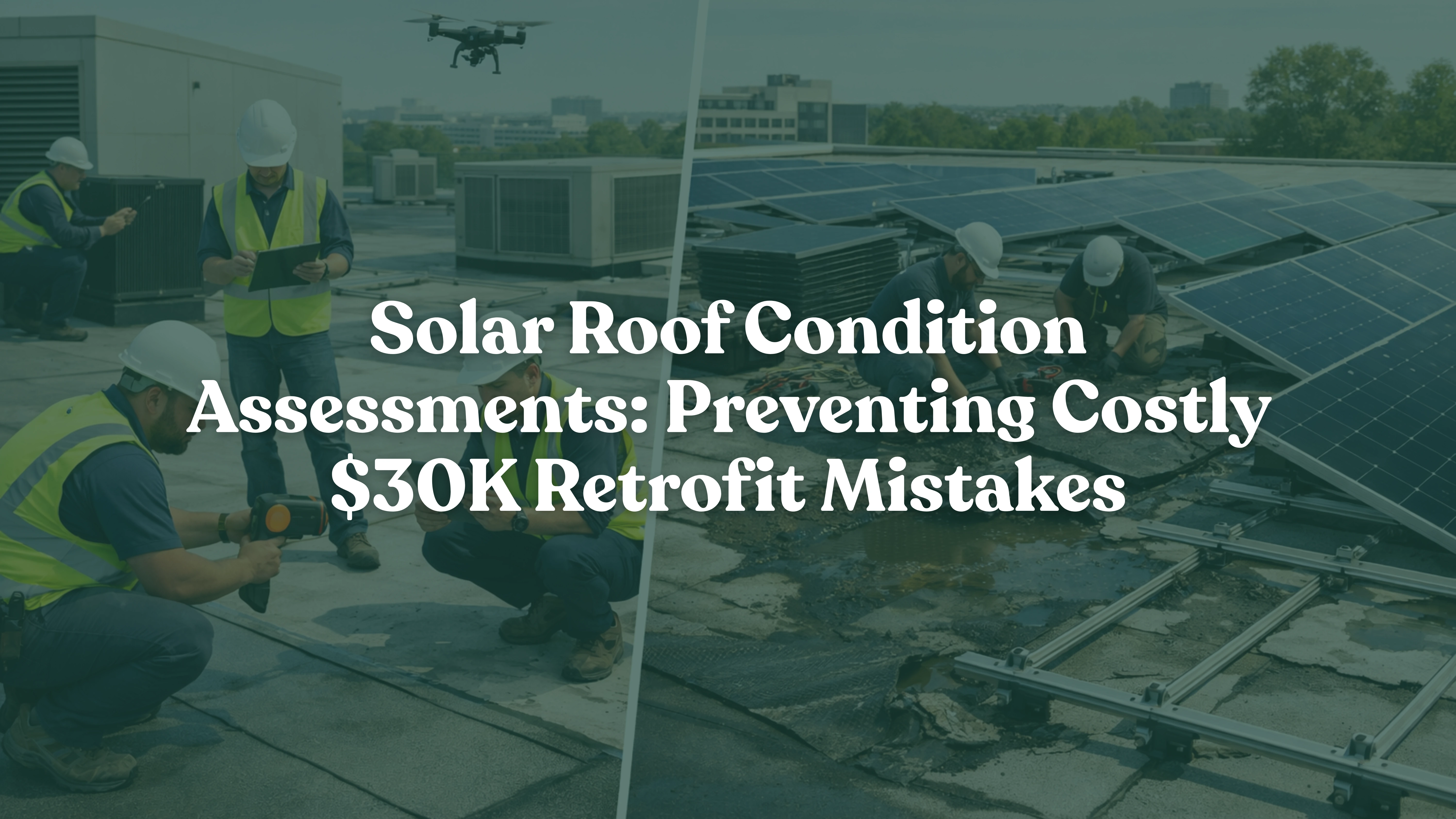
Picture this: You’ve closed a six-figure commercial solar deal. Installation wraps smoothly, panels produce power, and your client is thrilled. Six months later, you get an angry call about roof leaks. Now you’re facing a $30,000 bill to remove panels, fix the roof, and reinstall everything. This nightmare happens more often than you’d think, and it’s entirely preventable with proper solar roof assessment during initial surveys.
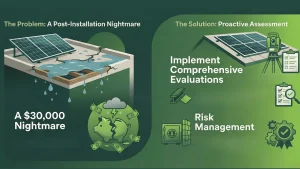
For US solar installers and EPCs, conducting thorough solar roof assessment isn’t optional—it’s essential risk management. The solution lies in implementing comprehensive evaluation protocols examining structural integrity, material condition, and remaining lifespan before mounting a single panel. This upfront investment in solar roof assessment saves tens of thousands in retrofit costs while protecting your reputation.
The $30K Problem: Hidden Costs of Skipping Evaluations
Many solar professionals focus exclusively on energy calculations and shading analysis during site visits. However, overlooking roof conditions creates a ticking time bomb. Removing and reinstalling panels for unexpected roof repairs costs $2,000-$6,000 on residential projects, while commercial installations easily exceed $30,000.
Asphalt shingle roofs last 20-25 years, while solar systems operate 25-30 years. Installing panels on a 10-15 year old roof guarantees mid-life panel removal. This becomes problematic for EPCs on commercial projects where bundled roof replacement and solar installation proves far more cost-effective than sequential work.
Essential Elements of Professional Solar Roof Assessment
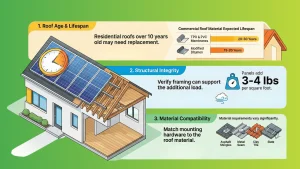
A complete solar roof assessment evaluates multiple factors impacting installation success. First, document roof age and remaining lifespan. For residential work, roofs over 10 years old warrant serious replacement consideration. Commercial flat roofs vary by material—TPO and PVC membranes last 20-30 years, while modified bitumen provides 15-20 years.
Structural integrity comes next. Verify that rafters, trusses, and decking support additional loads from panels and mounting hardware. Solar panels add just 3-4 pounds per square foot, but heavy snow or high wind areas need extra attention. Older buildings may have undersized framing requiring reinforcement.
Material compatibility represents another crucial factor. Asphalt shingles work well with standard flashed mounts, but tile roofs require specialized hardware preventing breakage. Metal roofing offers excellent durability and simplifies installation, whereas slate demands extreme care. Understanding these requirements during your solar roof assessment prevents costly delays.
Red Flags During Solar Roof Assessment
During solar roof assessment, certain warning signs trigger immediate repair recommendations. Visual damage like cracked, curling, or missing shingles indicates accelerated aging. Sagging areas suggest serious structural problems worsening under panel loads.
Water damage presents critical concerns. Check attics for visible daylight signaling roof penetrations. Look for water stains, rot, or mold on decking and framing. Minor leaks cause substantial deterioration over time, and panel mounting exacerbates unaddressed issues.
Document roof penetrations and existing equipment. HVAC units, skylights, vents, and chimneys impact mounting space and create obstacles. Accounting for these features prevents redesigns eroding profitability.
Economics of Combined Roof and Solar Projects
Smart installers create tremendous client value while protecting their interests. National Renewable Energy Laboratory research shows bundling roof replacement with solar installation saves homeowners an average $4,000 versus sequential projects.
Combined projects eliminate duplicate mobilization costs and reduce permitting complexity. Instead of paying $15,000 for separate roof replacement and $25,000 for solar ($40,000 total), clients pay $35,000 combined. Factor in the 30% federal solar tax credit applying to solar portions including related roof work, and value becomes compelling.
Therefore, partnering with reputable roofing contractors creates win-win scenarios. Your solar roof assessment becomes the foundation for presenting value-added services during sales.
Documentation and Technology Best Practices
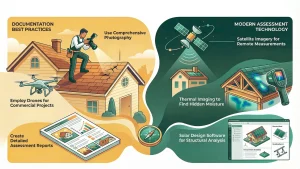
Professional documentation protects you and clients. Start with comprehensive photography covering entire roof surfaces, focusing on damage and structural concerns. Use drone imagery for commercial projects capturing high-resolution overviews without risking crew safety.
Create detailed reports including roof age, material type, condition rating, and recommended actions. Specify whether roofs suit immediate installation, need minor repairs, or require full replacement.
Modern tools transform how professionals conduct solar roof assessment. Satellite imagery provides accurate dimensions without initial visits. Thermal imaging reveals hidden moisture problems invisible to naked eyes. Solar design software incorporates structural analysis, flagging concerns and recommending mounting solutions.
Training Teams and Communicating Results
Quality solar roof assessment depends on installer knowledge. Invest in regular training covering common materials, typical failures, and proper inspection techniques. Develop clear escalation procedures for questionable situations.
Present findings to clients effectively. Lead with education rather than sales pressure. Explain why roof condition matters using clear examples and cost comparisons. When recommending roof replacement, frame it as investment protection. Solar systems represent 25-30 year commitments—installing on failing roofs guarantees future hassles.
Present combined pricing alongside sequential costs highlighting savings. Nevertheless, respect client autonomy. Document choices clearly in contracts, specifying warranty coverage excludes roof-related issues identified during assessment.
Building Reputation Through Quality Assessment

In today’s competitive market, reputation differentiates successful installers from struggling competitors. Word spreads when companies deliver thorough, professional solar roof assessment preventing problems.
Client testimonials highlighting assessment attention provide powerful marketing content. Stories about avoided disasters build credibility more effectively than advertising. These narratives resonate with commercial clients making significant investments.
Comprehensive assessments reduce callbacks and warranty claims, improving profitability while freeing resources for business development. Time invested in proper evaluation pays dividends throughout project lifecycles, generating referrals and repeat business.
Conclusion: Partner with EnergyScape Renewables
Avoiding $30K retrofit surprises starts treating solar roof assessment as critical to every survey. By implementing systematic protocols, leveraging modern tools, and training teams thoroughly, you protect clients, preserve profitability, and build lasting success.
At EnergyScape Renewables, we understand installations are only as reliable as supporting roofs. Our comprehensive process examines every detail affecting performance and longevity, including thorough evaluations by trained professionals. We partner with top-rated contractors providing seamless, cost-effective solutions when roof work becomes necessary.
Whether you’re a residential installer expanding capabilities or an EPC managing commercial projects, proper solar roof assessment separates industry leaders from the pack. Don’t let inadequate evaluations compromise your reputation or cost tens of thousands in retrofits. For insights on optimizing operations and leveraging advanced design tools, visit Sunscape Solar.
Ready to elevate your protocols and deliver unmatched value? Contact EnergyScape Renewables today to discover how our proven methodologies transform installations from start to finish.
sjayakanth@energyscaperenewables.com