
Solar Project Management Software: Complete Guide For Installers

Solar Project Management Software: Complete Guide From Lead Capture to Permission to Operate
Managing a solar installation business means juggling countless moving parts. From capturing leads to coordinating installations and navigating utility approvals, every stage demands attention. That’s exactly where solar project management software makes the difference. Unlike generic business tools, purpose-built platforms understand your unique workflow from initial contact through Permission to Operate (PTO).
According to industry research, CRM systems deliver an ROI of $8.71 for every dollar spent. However, this return only materializes when you’re using tools designed specifically for your business model. For solar installers and EPCs competing in 2026’s evolving market, the right platform isn’t just helpful—it’s essential for survival.
Why Generic Tools Can’t Handle Solar Projects
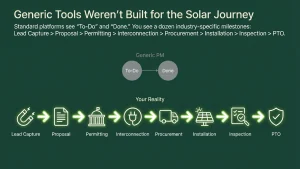
Standard project management platforms handle basic task tracking effectively. Unfortunately, solar installations require managing dozens of industry-specific milestones that generic systems simply weren’t built to handle.
The Solar Project Complexity Challenge
Consider your typical installation journey. You’re not just moving a task from “started” to “completed.” Instead, you’re managing multiple complex stages simultaneously.
First, you’re capturing leads from various sources like door-to-door campaigns, digital advertising, and referral programs. Then, you’re scheduling site surveys, analyzing utility bills, and modeling consumption patterns. Meanwhile, your design team creates system iterations using tools like Aurora Solar or HelioScope.
Next comes proposal generation with multiple financing options, followed by contract execution and deposit collection. After that, you’re submitting permits to local authorities, managing interconnection applications with utilities, and coordinating equipment procurement.
Finally, you’re scheduling installations around weather conditions, coordinating inspections, tracking PTO applications, and handling post-installation monitoring. Each stage involves specific data requirements, document attachments, team handoffs, and customer communications.
The Cost of Using Wrong Tools
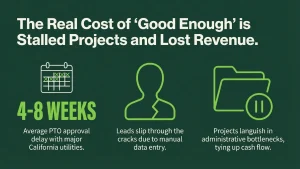
Consequently, trying to force this complex workflow into generic project management creates serious problems. You’ll face endless custom fields, clunky workarounds, and manual data entry that wastes valuable time. Moreover, important leads slip through the cracks while projects stall in administrative bottlenecks.
Essential Features of Purpose-Built Solar Project Management Software
Solar-specific platforms understand your workflow because they’re built around it. Therefore, they include features that generic tools simply can’t replicate.
Smart Lead Management Systems
Modern solar project management software captures leads from every channel automatically. This includes website forms, door-knocking mobile apps, trade show scanners, paid advertisements, and referral programs. Everything consolidates in one centralized location.
Furthermore, these systems score leads based on solar-specific criteria. They evaluate roof condition, shading analysis results, utility rates, available incentives, and financing qualification probability. Additionally, the platform automatically routes high-quality residential leads to your most experienced sales representatives.
Meanwhile, commercial opportunities get directed to your C&I specialists. This intelligent distribution is impossible with generic tools that don’t understand solar qualification factors.
Seamless Design Tool Integration
Your solar project management software should communicate directly with your design platforms. Integration with Aurora, HelioScope, or Pylon means your design team pulls customer data, site details, and consumption information directly from the system.
When designs are finalized, they flow back automatically. This triggers the next workflow stage without manual file transfers or duplicate data entry. As a result, you eliminate the common problem of outdated designs being sent to customers or permitting authorities.
Real-Time Financing Integration
Generic tools might let you create PDF proposals. In contrast, solar project management software integrates with actual financing platforms like GoodLeap, which has facilitated over $30 billion in loans to more than 1 million homeowners.
Your sales representatives can generate real-time financing quotes inside the platform. Customers compare loan terms, see actual monthly payments, and understand tax credit implications immediately. All this happens within a branded proposal that reflects current rates and approval status.
Consequently, this real-time integration dramatically speeds up your sales cycle and increases close rates.
Comprehensive Project Milestone Tracking
Once a contract is signed, solar project management software tracks your project through every critical stage. Your operations team sees at a glance which projects are stuck in permitting, which are awaiting inspection, and which are in the PTO queue.
The system sends automated reminders when milestone deadlines approach. It also alerts the right team members when action is required. This visibility prevents projects from languishing in administrative limbo and helps you identify bottlenecks before they become problems.
Mobile Field Team Coordination
Installation crews need access to project information in the field. Solar project management software provides mobile apps that let field teams access site plans, equipment specifications, customer notes, and installation checklists.
When crews complete work, they upload photos, update project status, and trigger the next workflow stage—all from their phones. Integration with field survey tools like Sunscape means your site assessment data flows directly into the platform.
This eliminates redundant data entry and ensures everyone works from the same accurate information.
Automated Customer Communication
Solar projects take weeks or months from initial contact to final activation. During that time, customers need regular updates to stay engaged and confident.
Solar project management software automates these touchpoints with triggered emails and text messages at each project stage. When a permit is approved, the customer gets notified automatically. Installation scheduling triggers preparation instructions automatically. Upon PTO approval, they get activation details instantly.
This consistent communication reduces support calls and improves customer satisfaction scores significantly.
Solar Project Management Software: Navigating the Permission to Operate Process
One of the most frustrating stages is the final push to Permission to Operate. Your system is installed and inspections are complete. However, the project can’t be activated until the utility grants PTO approval.
Understanding PTO Timelines
According to recent industry research, PTO approval typically takes anywhere from a few days to several weeks. Major California utilities like PG&E, SCE, and SDG&E currently average four to eight weeks for complete approval in 2025.
Meanwhile, smaller municipal utilities and rural cooperatives often move faster at two to three weeks total. This process involves submitting interconnection applications, passing professional inspections, and receiving final utility authorization.
How Solar Project Management Software Helps
Solar project management software helps you navigate this final hurdle by tracking PTO applications separately. It maintains all required documentation in one place and provides templates for utility-specific submission requirements.
When utilities request additional information, your team can respond immediately instead of searching through email threads and file folders. The system also helps you identify patterns in PTO delays by utility provider.
Consequently, you can adjust your project timelines and customer expectations accordingly. This reduces frustration and improves overall customer satisfaction.
Why Solar Project Management Software Matters More in 2026
The solar market is shifting dramatically. With evolving incentive structures and increasing competition, installers need to compete on speed and customer experience.
Market Growth and Competition
Solar technology is projected to drive 80% of the growth in global renewable capacity from 2024 to 2030. This means competition for customers will intensify significantly in the coming years.
The installers who succeed will be those who can move projects from lead to PTO faster. They’ll have fewer errors, better communication, and superior customer experiences throughout the journey.
The Operational Efficiency Advantage
Solar project management software isn’t just another business tool—it’s your competitive advantage. When you respond to leads in minutes instead of hours, you capture more opportunities.
Responding to leads in minutes instead of hours helps you capture more opportunities. Generating accurate proposals in one day instead of three accelerates your deal closures. Keeping projects moving smoothly without constant manual intervention allows you to complete more installations with the same team size.
Additionally, over 65% of companies consider CRM tools extremely effective for improving business operations. This effectiveness multiplies when you’re using industry-specific platforms.
Making the Transition to Better Tools
If you’re currently managing your solar business with spreadsheets, generic tools, or disconnected point solutions, switching systems might seem overwhelming. However, the transition is simpler than you think.
What to Look For
Look for providers who offer migration assistance and pre-built templates for common solar workflows. Ensure they provide integrations with the tools you already use, including design software, financing platforms, and field survey applications.
Your team’s productivity might dip slightly during the first few weeks as they learn the new system. Nevertheless, most installers see measurable improvements within 30 days of implementation.
Getting Started
The solar installation business is complex enough without fighting your own tools. Purpose-built solar project management software handles the complexity so your team can focus on what they do best—designing great systems and delivering excellent customer experiences.
Transform Your Solar Business Today: Solar Project Management Software
Managing a solar installation company requires juggling countless moving parts simultaneously. From capturing and qualifying leads to designing systems, coordinating installations, and navigating utility approvals, every stage demands specialized tools.
Generic platforms force you to work around their limitations constantly. In contrast, purpose-built solutions streamline every step of your workflow efficiently.
Streamline Your Workflow with Sunscape
Sunscape Solar provides solar project management software and site survey applications designed specifically for US solar installers and EPCs. Our platform streamlines your entire journey from lead capture to Permission to Operate with live project tracking.
We offer design tool integrations, automated workflow management, and real-time project visibility. Stop fighting with generic tools that don’t understand your business. Discover how Sunscape can help you close more deals and complete projects faster than ever before.

Accelerate Approvals with Expert Engineering
For solar EPCs looking to accelerate project timelines and ensure smooth approvals, EnergyScape Renewables offers comprehensive solar engineering services. This includes 24-hour PE stamping across all 50 states, overnight engineering, permitting, and interconnection services.
Our expert team helps you avoid PTO delays, reduce rework, and keep projects moving efficiently from design to final activation. We understand the complexities of utility interconnection and permitting requirements nationwide.
Frequently Asked Questions: Solar Project Management Software
What makes solar project management software different from regular project management tools?
Solar project management software includes industry-specific features like design tool integration, financing platform connections, PTO tracking, and solar-specific lead scoring that generic platforms don’t offer.
How long does it take to implement solar project management software?
Most solar companies see measurable improvements within 30 days. The initial setup typically takes 1-2 weeks, with full team adoption happening within the first month.
Can solar project management software integrate with Aurora and HelioScope?
Yes, leading solar project management platforms integrate directly with major design tools including Aurora, HelioScope, and Pylon for seamless data flow.
Does solar project management software help with PTO delays?
Absolutely. The software tracks all PTO requirements, maintains documentation, and provides utility-specific templates to ensure faster approval times.
What’s the typical ROI for solar project management software?
Industry data shows CRM systems deliver an average ROI of $8.71 for every dollar spent when properly implemented.
sjayakanth@energyscaperenewables.com