
NABCEP Certification Guide 2025 | Solar Installer Tips

NABCEP Certification 2025: Your Complete Roadmap to Solar Installation Excellence
The solar industry is experiencing unprecedented growth, with the U.S. adding over 63 GW of photovoltaic power in 2024 alone. For solar installers and Engineering, Procurement, and Construction (EPC) companies, staying competitive means more than just keeping up with technology—it requires proven expertise that customers can trust. That’s where NABCEP certification becomes your game-changer.
The North American Board of Certified Energy Practitioners (NABCEP) has established itself as the gold standard for renewable energy certifications. As many as 18,000 solar employees have received one NABCEP’s many certifications, from PV Associate to PV Installation Professional, as well as special certificates for sales, design, service, inspection, and energy storage. This comprehensive guide will walk you through everything you need to know about NABCEP certification in 2025, including the exciting new opportunities and pathways available.
What Makes NABCEP Certification Essential for Solar Professionals?
NABCEP certification isn’t just another credential—it’s your professional passport to credibility and career advancement. Since 2007, NABCEP’s PV Installation Professional Certification has met the vigorous standards for accreditation under the ISO/IEC 17024:2012 General Requirements for Bodies Operating Certification of Persons. This accreditation ensures that your certification is recognized globally and meets the highest industry standards.

For EPC companies, having NABCEP-certified professionals on your team provides a significant competitive advantage. The certification demonstrates your commitment to quality, safety, and professional excellence—factors that increasingly matter to customers making substantial investments in solar energy systems.
The Business Impact of NABCEP Certification
The numbers speak for themselves: Nearly 90% of American homeowners who have installed solar panels are satisfied with their decision, according to a 2024 Forbes Home’s survey. However, the remaining 10% often cite installer competency and project quality as primary concerns. NABCEP certification directly addresses these issues by ensuring that certified professionals have demonstrated extensive knowledge and hands-on experience.
For EPCs and installers, this translates to:
- Enhanced customer confidence and trust
- Reduced liability and insurance costs
- Access to more lucrative commercial and utility-scale projects
- Improved project quality and reduced callbacks
- Stronger competitive positioning in the market
Understanding NABCEP’s Certification Pathways in 2025
NABCEP offers multiple certification levels designed to match your career stage and specialization. Here’s what’s available for 2025:
Associate Level Credentials
The NABCEP Associate credential serves as your entry point into professional solar certification. It’s perfect for:
- Recent graduates from solar training programs
- Workers early in their renewable energy careers
- Experienced professionals expanding into solar services
- Those in renewable energy roles without existing certifications
Requirements for PV Associate:
- Completion of approved training (typically 40-58 hours)
- Passing the Associate exam
- No field experience required
Professional Board Certifications
These advanced certifications require both training and demonstrated field experience:
PV Installation Professional (PVIP) – The Gold Standard The PV Installation Professional (PVIP) Board Certification is considered the gold standard for PV professionals in the renewable energy industry. This certification validates your competence in PV design, installation, operations, commissioning, and maintenance.

Requirements:
- 58 hours of advanced training
- OSHA 10 certification
- Demonstrated field experience in decision-making roles
- Passing the rigorous PVIP exam
Specialist Certifications:
- PV Design Specialist (PVDS) – For advanced system designers
- PV Installer Specialist (PVIS) – For installation experts
- PV Technical Sales (PVTS) – For sales professionals
- PV System Inspector (PVSI) – For inspection specialists
- PV Commissioning & Maintenance Specialist (PVCMS) – For O&M professionals
The Game-Changing Energy Storage Certification
2025 brings exciting developments with NABCEP’s new Energy Storage Installation Professional (ESIP) certification. The North American Board of Certified Energy Practitioners (NABCEP) is excited to announce that our collaborations with the CREATE Energy Center and the Midwest Renewable Energy Association (MREA) to create an Energy Storage Certification have become a reality.
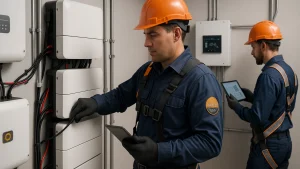
This certification addresses the growing demand for battery storage integration with solar systems. As a feature of our grant issued by the National Science Foundation, NABCEP (along with our excellent partners at the CREATE Energy Center and MREA) is allowing the first 200 approved applicants for our ESIP exam to have the opportunity to take it for FREE!
ESIP Requirements:
- 58 hours of advanced energy storage training
- OSHA 30 certification (higher than other certifications)
- Demonstrated experience in energy storage projects
- Decision-making role in at least 6 project credits
New Developments and Opportunities in 2025
Board Eligible Status Program
NABCEP has introduced a revolutionary Board Eligible Status program that allows more flexibility in completing certification requirements. Candidates must complete 58 hours of approved classroom learning and pass the PVIP examination to receive temporary “Board Eligible” status, after which they have 3 years to gain the required solar installation experience in a decision-making capacity.
This change addresses a common industry challenge by allowing professionals to demonstrate theoretical knowledge before acquiring hands-on experience—perfect for career changers and new graduates.
Enhanced Training Opportunities
Active PV Installation Professionals now receive 18 non-accredited hours towards the required 58 hours of training! This update recognizes the value of practical experience and reduces the training burden for working professionals.
Scholarship and Support Programs
NABCEP continues expanding access to certification through various programs:
- Les Nelson Scholarship Fund for volunteers
- Veterans pathway for military service members
- Company-wide accreditation programs
The Strategic Value for EPC Companies
For EPC companies, NABCEP certification provides multiple strategic advantages beyond individual employee development:
Company Accreditation Program
NABCEP Company Accreditation is the most prestigious accreditation that a PV installation company can earn in the renewable energy industry. This program allows installation companies to distinguish themselves through adherence to industry-recognized best practices.
Benefits include:
- Enhanced market credibility
- Access to premium projects
- Reduced insurance costs
- Improved customer confidence
- Marketing advantages
Competitive Differentiation
With the solar EPC market expected to reach significant growth—the Solar EPC Market Industry is expected to grow from 81.38(USD Billion) in 2023 to 196.52 (USD Billion) by 2032—having certified professionals becomes crucial for capturing market share.
Practical Steps to Achieve NABCEP Certification
Step 1: Assess Your Current Position
Determine which certification pathway aligns with your career goals and current experience level. Use NABCEP’s Career Pathways Brochure to identify the best fit.
Step 2: Complete Required Training
Choose from NABCEP-approved training providers. Popular options include:
- Solar Energy International (SEI)
- HeatSpring
- Midwest Renewable Energy Association (MREA)
- Local community colleges with accredited programs
Step 3: Gain Field Experience
For professional certifications, document your project experience in decision-making roles. Maintain detailed records of installations, including permits, inspections, and supervisor contacts.
Step 4: Prepare for the Exam
Utilize practice exams, study guides, and review materials. The NABCEP Job Task Analysis (JTA) provides the blueprint for each certification exam.
Step 5: Maintain Your Certification
All NABCEP certifications require continuing education for renewal. Plan for ongoing professional development to maintain your credentials.
Maximizing ROI from NABCEP Certification
For Individual Installers
- Increased earning potential (certified professionals often command 10-20% higher wages)
- Enhanced job security in a competitive market
- Access to leadership roles and advanced positions
- Professional recognition and credibility
For EPC Companies
- Higher project win rates
- Access to utility-scale and commercial projects
- Reduced insurance premiums
- Enhanced customer satisfaction and referrals
- Improved employee retention and recruitment
Looking Ahead: Future Trends in Solar Certification
The renewable energy landscape continues evolving rapidly. Key trends affecting certification include:
Technology Integration: With advancing inverter technology, smart systems, and IoT integration, certifications increasingly emphasize digital competencies alongside traditional installation skills.
Safety Focus: Enhanced safety requirements, including arc flash protection and advanced electrical safety protocols, are becoming standard.
Storage Integration: The growing prevalence of solar-plus-storage systems makes the new ESIP certification increasingly valuable.
Grid Modernization: Understanding smart grid integration and utility interconnection requirements becomes more critical.
Making Your Certification Investment Count
NABCEP certification represents a significant investment in your professional future. Here’s how to maximize its value:
New Professionals: Start with the Associate credential to establish credibility, then progress to professional certifications as you gain experience.
Experienced Installers: Focus on specialist certifications that align with your expertise and market demands in your region.
EPC Companies: Develop a systematic approach to employee certification, potentially targeting company-wide accreditation for maximum market impact.
Career Advancement: Consider multiple certifications to become a well-rounded professional capable of handling diverse projects and responsibilities.
Certified Expertise Meets Precision Engineering
NABCEP certification builds trust, credibility, and leadership in a competitive solar market—but pairing that expertise with top-tier project execution is what sets industry leaders apart.
That’s where Energyscape Renewables delivers. We empower certified professionals and EPCs with code-compliant plan sets, advanced system designs, and solar engineering services that meet the highest standards—on time and on budget.
Powered by Sunscape: Efficiency from Survey to Stamp
With tools like the Sunscape Site Survey App and Sunscape CRM, your certified teams can move faster from assessment to installation—without compromising on quality or compliance.
In a market where skill and speed matter, Energyscape and Sunscape are the partners you can trust to bring certified excellence to life.
sjayakanth@energyscaperenewables.com