
Common Planset Errors That Delay Project Timelines And Cost You Money

How Solar Planset Errors Delay Project Timelines And Drain Your Profits
Every solar installer knows the frustration: you’ve completed the site assessment, closed the deal, and scheduled installation—then your permit application gets rejected. Solar planset errors are silently draining profits from installers and EPCs across the United States, with permit rejections accounting for up to 40% of total project delays. However, understanding the most common mistakes in solar plan sets and implementing quality control measures can dramatically reduce permit review times and keep your projects on schedule. This comprehensive guide reveals the critical errors that cost you thousands and shows you exactly how to eliminate them.
The Most Critical Solar Permitting Mistakes Installers Make
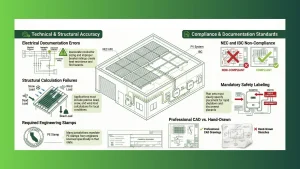
Incomplete or Inaccurate Electrical Documentation
One of the most frequent solar planset errors involves electrical schematics and diagrams. Authority Having Jurisdictions (AHJs) immediately red-flag applications with conductor sizing errors, improper breaker ratings, or missing equipment grounding conductors. Furthermore, single-line and three-line diagrams must be crystal clear and accurate.
These electrical details aren’t minor oversights. They represent serious safety concerns that inspectors take very seriously. For instance, incorrect wire sizing creates electrical resistance, generating heat that reduces system efficiency and presents genuine fire hazards. Therefore, every electrical connection specification in your solar permit application must be precise and code-compliant.
Non-Compliance With NEC and IBC Building Codes
Solar permit rejections frequently stem from failure to comply with National Electrical Code (NEC) Article 690 for PV systems and Article 705 for interconnections. Additionally, International Building Code (IBC) requirements vary by jurisdiction, and local amendments add another layer of complexity.
The challenge intensifies when solar contractors expand into new territories. What passes easily in one jurisdiction might trigger immediate rejection in another. As a result, successful installers maintain updated templates for each AHJ they work with, ensuring consistent compliance across different regulatory environments.
Missing or Incorrect Structural Calculations
Structural engineering represents another common area where solar planset errors occur. Your plan sets must include accurate dead load, snow load, and wind load calculations. This becomes especially critical in coastal regions where hurricane-force winds demand rigorous engineering analysis.
Moreover, many jurisdictions require PE (Professional Engineer) stamps from engineers licensed in that specific state. Therefore, working with qualified engineering professionals who understand local requirements becomes non-negotiable for avoiding costly resubmissions.
Inadequate System Labeling and Safety Placards
Inspectors consistently cite missing rapid shutdown labels, incorrect disconnect signage, and improperly formatted warning placards as rejection reasons. While these might seem like minor details, they’re mandatory safety requirements under current electrical codes.
The labeling requirements have become more stringent following recent NEC updates. Consequently, your solar plan sets must clearly show placement and specifications for all required labels and placards. This documentation proves you understand and will comply with safety requirements during installation.
Unclear or Ambiguous Solar Drawings
When your solar diagrams lack clarity, installers and inspectors struggle to understand the installation plan. Vague electrical details, unclear conduit routing, or ambiguous array layouts create confusion that triggers permit rejections.
Professional-quality CAD drawings make all the difference. They demonstrate competence and attention to detail that builds credibility with AHJs. In contrast, hand-drawn sketches or poorly formatted documents suggest inexperience and increase scrutiny of your entire application.
How Bad Data Ruins Your Solar Design Process
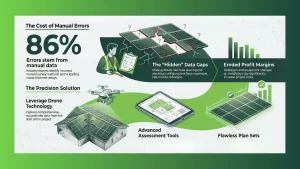
The foundation of quality solar plan sets starts at the site assessment. Industry experts report that 86% identify incorrect data from manual survey methods as the leading cause of errors, revisions, and delays in solar permitting. Traditional tape measures and handwritten notes simply don’t scale for today’s competitive market.
Modern installers leverage drone technology and advanced site assessment tools to capture comprehensive, accurate data from the start. Furthermore, missing site-specific details like roof truss spacing, actual electrical panel configuration, or nearby shading sources creates problems that surface during plan review or installation day. These oversights force expensive redesigns and equipment changes that erode your profit margins.
The Hidden Financial Impact of Solar Permit Delays
Project delays from solar planset errors create cascading financial impacts. First, there’s the direct cost of resubmission fees and engineering revisions. Then, your installation crew’s schedule gets disrupted, creating inefficiencies across your entire operation.
Customer relationships suffer significantly during extended permitting delays. Homeowners become anxious, questioning their decision to go solar. Commercial clients face budget pressures and may even reconsider the project entirely. Meanwhile, your competitors continue installing systems and collecting positive reviews.
Additionally, lengthy permit delays can cause you to miss important deadlines. Projects that stretch beyond critical dates might lose valuable tax benefits, directly impacting your customer’s return on investment and your company’s reputation.
Proven Strategies to Eliminate Solar Planset Errors
Implement Rigorous Internal Quality Reviews
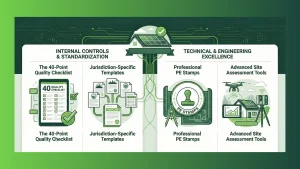
Before submitting any solar permit application, conduct thorough internal reviews. Many successful contractors employ a 40-point quality checklist that catches common errors before AHJs see them. This investment in review time pays massive dividends through first-pass approval rates.
Your review process should verify every technical specification, confirm all required documentation is included, and ensure compliance with jurisdiction-specific requirements. Moreover, having a second set of eyes review complex projects prevents costly oversights that individual designers might miss.
Standardize Templates for Each Jurisdiction
Create and maintain jurisdiction-specific templates that incorporate local code requirements, preferred documentation formats, and AHJ-specific details. When you encounter permit rejections or receive feedback from inspectors, immediately update your templates to prevent recurring mistakes.
This systematic approach transforms individual corrections into institutional knowledge. New team members can leverage proven templates instead of reinventing the wheel, ensuring consistency and quality across your entire project portfolio.
Partner With Qualified Engineering Professionals
Don’t cut corners on engineering services. Structural and electrical PE stamps aren’t optional in many jurisdictions, and attempting to avoid these requirements only leads to rejections and delays.
Working with experienced solar engineering firms ensures your plan sets meet technical requirements and regulatory standards. These professionals stay current with code changes and understand regional variations in permitting requirements. Additionally, their stamps carry credibility with AHJs, smoothing the approval process.
Invest in Professional Site Assessment Tools
Upgrade from manual measurement methods to proven site assessment technologies. Modern tools capture comprehensive site data efficiently, reducing errors while improving documentation quality.
Accurate upfront data prevents the “garbage in, garbage out” problem that plagues many solar projects. When your engineers work with precise measurements and complete site information, they can design systems that install smoothly and perform optimally.
The Competitive Advantage of First-Pass Approvals
Solar contractors who consistently achieve first-pass permit approvals gain significant competitive advantages. Your project timelines become predictable, allowing better resource allocation and customer communication. Installation crews maintain consistent schedules, improving efficiency and morale.
Furthermore, AHJs remember installers who submit quality applications. Building positive relationships with local permitting offices creates goodwill that benefits future projects. The numbers speak clearly: reducing your average permit timeline from 50 days to under two weeks transforms your business economics. You complete more projects annually, improve cash flow, and build reputation through reliable execution.
Navigating Today’s Evolving Regulatory Landscape
The solar permitting environment continues evolving in 2026. Some jurisdictions now offer automated approval through platforms like SolarAPP+, which can reduce review times to nearly zero for compliant residential installations. However, these systems demand precisely formatted, accurate plan sets.
Meanwhile, FERC Order 2023 has reformed interconnection procedures, implementing cluster approaches and stricter timelines with penalties for utilities that miss deadlines. Understanding these regulatory changes and adapting your processes accordingly separates leading contractors from those struggling with constant delays.
How Professional Engineering Services Prevent Costly Mistakes
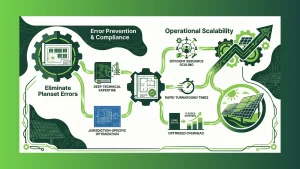
Partnering with specialized solar engineering firms eliminates the most common planset errors before they reach AHJs. These professionals bring deep expertise in code compliance, structural analysis, and electrical design that typical installation companies can’t maintain in-house.
Quality engineering services provide more than just PE stamps. They offer comprehensive plan reviews, jurisdiction-specific optimization, and rapid turnaround times that keep projects moving. Moreover, professional engineering partners help you scale efficiently. Instead of hiring full-time engineers for fluctuating workloads, you access expert resources exactly when needed.
Conclusion: Partner With EnergyScape Renewables for Flawless Solar Plan Sets
Eliminating solar planset errors isn’t just about avoiding permit delays—it’s about building a sustainable, profitable solar installation business. Every rejection wastes time and money while damaging customer relationships and company reputation. Conversely, consistently clean plan sets create competitive advantages through faster project completion, improved cash flow, and enhanced credibility.
At EnergyScape Renewables, we specialize in preventing these costly mistakes before they happen. Our experienced engineering team provides comprehensive solar design services, PE stamping, and permitting support tailored to your specific jurisdiction requirements. We understand that solar installers and EPCs need partners who deliver accurate, compliant plan sets on tight timelines.
Whether you’re expanding into new territories, scaling your operations, or simply tired of permit rejections derailing your projects, our team brings the expertise to keep your installations on track. We’ve helped hundreds of solar contractors eliminate planset errors, reduce permitting timelines, and improve their bottom line.
Ready to stop losing time and money to preventable permit delays? Contact EnergyScape Renewables today to discuss how our engineering services can transform your solar permitting success. Additionally, explore comprehensive solar project management solutions at Sunscape Solar to streamline your entire installation workflow from proposal to PTO.
sjayakanth@energyscaperenewables.com