
5 Proposal Elements That Convert Leads Into Signed Contracts

Solar Proposals Convert Leads: 5 Proposal Elements That Turn Prospects Into Signed Contracts
Here’s the harsh truth: you’re spending thousands on lead generation, your sales team is working overtime, yet prospects keep asking for “more time to think.” Sound familiar? The problem isn’t your pricing or your product—it’s your solar sales proposal. According to recent industry data, only 15% of generic solar proposals convert into signed contracts, while customized, strategic proposals close at nearly 30%. That’s a massive difference that directly impacts your bottom line.
The solution? Stop sending documents that read like equipment catalogs. Instead, start delivering solar proposals that address real concerns, demonstrate clear value, and make the buying decision effortless. Throughout this article, we’ll break down the five critical proposal elements that US solar installers and EPCs use to turn hesitant prospects into committed customers.
1. Personalized Energy Analysis With Clear ROI
Generic proposals don’t cut it anymore. Your prospects receive multiple quotes, and they’re comparing every detail. What sets winning solar sales proposals apart is personalization that speaks directly to the customer’s situation.
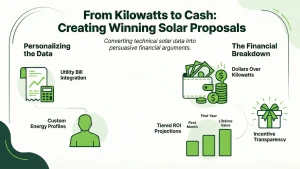
Start by incorporating specific data from their utility bills. Show their current energy consumption patterns, peak usage times, and how these translate into costs. Then, demonstrate exactly how your solar system addresses their unique energy profile. Moreover, break down the return on investment into digestible chunks—first-month savings, first-year projections, and lifetime value.
Here’s what makes this element powerful: homeowners don’t think in terms of kilowatt-hours. They think in dollars saved. Consequently, your solar proposal should translate technical specifications into financial benefits. Include multiple financing scenarios if you offer them, showing how different payment options affect their monthly cash flow and long-term savings.
Don’t forget to highlight available incentives. The federal solar tax credit, local rebates, and net metering programs can significantly reduce the overall system cost. However, many prospects aren’t aware of these benefits. By clearly outlining each incentive and its dollar value, you’re demonstrating expertise while making the investment more attractive.
2. Visual System Design That Builds Confidence
Words on paper won’t convince someone to make a $20,000+ decision. That’s why visual elements have become non-negotiable in high-converting solar proposals. Modern prospects need to see exactly what they’re buying before they sign any contract.
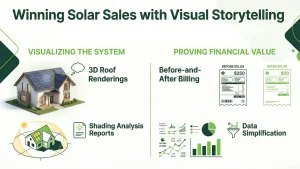
Include 3D roof renderings that show precise panel placement. These visuals help customers envision their future system and eliminate concerns about aesthetics. Additionally, provide shading analysis reports that demonstrate your technical expertise. When prospects see detailed solar access data, they gain confidence in your system’s projected performance.
Furthermore, use before-and-after comparisons. Show their current energy bills alongside projected costs after installation. Visual graphs and charts make complex data accessible, especially for customers who aren’t technically inclined. Remember, clarity builds trust, and trust closes deals.
Professional solar proposal design isn’t just about looking good—it’s about communication. Instead of overwhelming customers with technical jargon, effective proposals use visual storytelling to simplify the solar journey and make decision-making straightforward.
3. Transparent Pricing With No Hidden Surprises
Nothing kills a deal faster than unclear pricing. Your solar proposal must include a comprehensive cost breakdown that leaves zero room for confusion. Prospects have been burned by hidden fees before, so transparency is your competitive advantage.
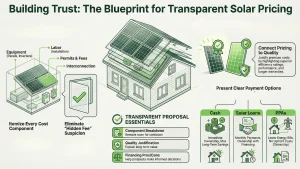
List every cost component separately: equipment, labor, permits, interconnection fees, and installation services. Break down exactly what they’re paying for and why each element matters. This level of detail demonstrates professionalism and eliminates the suspicion that often comes with vague pricing.
Additionally, explain how pricing relates to quality. If you’re using premium equipment, justify the investment by highlighting longer warranties, better efficiency ratings, and superior performance. On the other hand, if budget-conscious customers need more affordable options, present them clearly alongside the differences in long-term value.
Smart solar installers also include payment options prominently. Whether it’s cash purchase, solar loans, or PPAs, each financing method should have its own section with clear pros and cons. This approach respects your prospect’s intelligence while helping them make an informed decision that fits their financial situation.
4. Realistic Timeline With Milestone Transparency
Overpromising timelines creates frustration and erodes trust. Your solar sales proposal should outline a realistic installation schedule with clear milestones from contract signing through system activation.
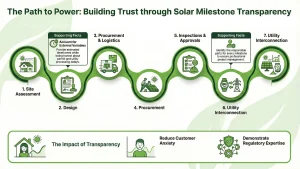
Break down each phase: initial site assessment, engineering design, permit applications, equipment procurement, installation work, inspections, and utility interconnection. Provide estimated timeframes for each stage, but be honest about variables outside your control, particularly permit approval and utility processing times.
This transparency accomplishes two things. First, it sets appropriate expectations, reducing customer anxiety during the process. Second, it demonstrates your expertise in navigating the regulatory landscape. When prospects see you’ve thought through every step, they’re more confident in your ability to deliver.
Moreover, include responsible party information for each milestone. Customers want to know who handles permits, inspections, and utility coordination. Clear accountability throughout the project lifecycle shows you run a professional operation that won’t leave them hanging.
5. Social Proof With Verifiable Credentials
Your prospects are skeptical—and they should be. The solar industry has its share of fly-by-night operators who overpromise and underdeliver. That’s why social proof is crucial in your solar proposal strategy.
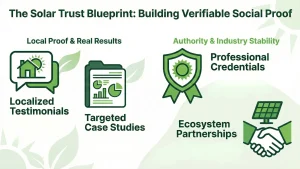
Include customer testimonials from similar projects in their area. Local references carry more weight than generic reviews. Additionally, showcase your company’s credentials: NABCEP certifications, manufacturer training programs, years in business, and total installations completed.
Case studies work exceptionally well. Present 2-3 projects similar to what you’re proposing, including challenges faced and results delivered. Real examples demonstrate your problem-solving ability and give prospects confidence you can handle their specific situation.
Furthermore, highlight any partnerships with reputable manufacturers, financing institutions, or industry associations. These relationships signal stability and credibility. When customers see you’re connected within the solar industry ecosystem, they feel more secure investing in your services.
Making the Signing Process Effortless
Even perfect proposals fail if the contract signing process is cumbersome. In 2026, digital signatures are standard. Your solar sales proposal should seamlessly transition into a binding agreement with convenient e-signature capability.
Remove friction from this final step. Provide clear next-step instructions, immediate contact information for questions, and a simple approval process. The faster prospects can move from “yes” to “signed,” the less likely they are to develop cold feet or get distracted by competing quotes.
Partner With Experts Who Understand Proposal Success
Creating winning solar proposals consistently requires expertise across multiple disciplines—from technical design to financial analysis to persuasive communication. Many successful solar installers and EPCs recognize they can’t master everything internally while also managing installations.
That’s where specialized support makes the difference. EnergyScape Renewables provides professional engineering services, PE stamping, and permit-ready design packages that strengthen your solar proposals from the technical foundation up. When your proposals are backed by solid engineering and professional documentation, prospects feel more confident moving forward.
Additionally, streamlining your entire proposal workflow with platforms like Sunscape helps you respond faster and more professionally than competitors. Speed matters—installers who deliver proposals within 24-48 hours consistently outperform those who take a week.
Final Thoughts
Converting leads into signed contracts isn’t about luck or aggressive sales tactics. It’s about crafting solar sales proposals that address concerns, demonstrate value, and make the buying decision clear and confident. Focus on these five elements—personalized analysis, visual design, transparent pricing, realistic timelines, and social proof—and you’ll see your conversion rates climb.
The solar market is competitive, but with the right proposal strategy, you’ll stand out from installers who still treat every prospect the same. Remember: every solar proposal represents more than just numbers on a page—it’s an opportunity to transform potential customers into long-term advocates who believe in your ability to power their future.
sjayakanth@energyscaperenewables.com