
State-by-State Solar Permitting Requirements: Your 2026 Compliance Roadmap

Solar Permitting Requirements: Complete 2026 State Guide
Every solar installer knows the frustration: you’ve designed the perfect system, your customer is ready to sign, and then the permit gets rejected. Solar permitting requirements are creating massive bottlenecks for US installers, costing thousands per project in delays and lost revenue. However, understanding state-specific solar permitting requirements in 2026 doesn’t have to derail your installation timeline. With the right compliance roadmap, you can navigate Authority Having Jurisdiction (AHJ) regulations efficiently.
The solar industry is experiencing unprecedented growth, with over 30 GW of new capacity installed in 2025 alone. Consequently, regulatory scrutiny is intensifying across all 50 states. Code officials are seeing more projects than ever, which means they’re identifying more potential safety issues requiring professional oversight.
Why Solar Permitting Requirements Are Getting Stricter in 2026
The landscape of solar permitting requirements has fundamentally changed. Three major factors are driving this shift across the United States.
First, updated building codes like ASCE 7-22 introduce new calculation methods that previous design approaches don’t address. Therefore, Professional Engineer (PE) review has become essential for code compliance in most jurisdictions. Similarly, battery storage integration adds electrical complexity demanding professional engineering oversight.
Additionally, climate change is influencing requirements as extreme weather events become more frequent. Engineering calculations must now account for worst-case scenarios, particularly in hurricane-prone regions like Florida and high-wind zones throughout the Midwest.
Understanding State-Specific Solar Code Compliance
Solar permit requirements vary dramatically from coast to coast. Nevertheless, certain patterns emerge when examining how different states handle compliance.
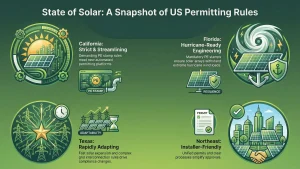
California: Leading the Nation in Solar Regulations
California maintains some of the tightest PE stamp requirements the solar industry has seen. Specifically, structural PE stamps are typically required for rooftop systems exceeding 10 kW. Meanwhile, electrical PE stamps usually kick in for systems over 50 kW.
Moreover, Title 24 compliance and seismic considerations add complexity to every California project. Senate Bill 379 now requires most jurisdictions to implement automated online permitting platforms like SolarAPP+. Consequently, the state is both demanding stricter standards while simultaneously working to streamline the approval process.
Florida: Hurricane-Zone Engineering Standards
In Florida, PE stamp requirements for solar installations are mandatory for virtually all projects. This isn’t bureaucratic red tape—it’s survival engineering in hurricane-prone regions. Hurricane zone regulations demand rigorous wind load calculations, and structural integrity assessments aren’t optional considerations.
When Category 5 hurricanes regularly threaten the state, every solar array must be engineered to withstand extreme wind loads.
Texas and Northeast: Regional Approaches
Texas presents a unique permitting landscape where rapid solar expansion means AHJs are adapting their solar compliance regulations quickly. Furthermore, Texas grid interconnection requirements add another layer to the permitting puzzle.
New York’s Unified Solar Permit has standardized requirements across municipalities, making the state one of the more installer-friendly environments. Similarly, Massachusetts has established clear interconnection tracks that simplify the approval process.
The Five Critical Components of Solar Installation Permits
Successful installers integrate solar permitting requirements seamlessly into their workflow. Here’s what every permit package must address:
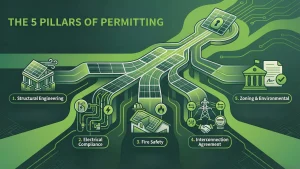
Structural Engineering Documentation
Your permit must prove the roof structure can safely support the solar array. This includes dead load calculations, live load assessments, and wind uplift resistance. Additionally, seismic considerations apply in earthquake-prone zones.
Electrical System Compliance
National Electrical Code (NEC) compliance forms the foundation of every solar permit. Nevertheless, local amendments can introduce jurisdiction-specific requirements. Your electrical plans must detail wire sizing, overcurrent protection, grounding systems, and rapid shutdown compliance.
Fire Safety Standards
Fire departments require specific clearances and access pathways on rooftop installations. Furthermore, rapid shutdown systems must meet the latest NEC Article 690 requirements protecting first responders during emergencies.
Interconnection Agreements
Before your system can connect to the grid, utilities require engineering documentation proving your installation won’t compromise grid stability. Therefore, interconnection applications often demand PE-stamped electrical plans, even when local AHJs don’t mandate them.
Environmental and Zoning Compliance
Some projects trigger environmental reviews or face zoning restrictions. Historic districts, agricultural preservation zones, and HOA regulations can all impact solar permitting requirements.
Streamlining Your Solar Permit Process for 2026
Smart installers aren’t letting solar compliance regulations slow their growth. Instead, they’re implementing proven strategies to accelerate approvals.
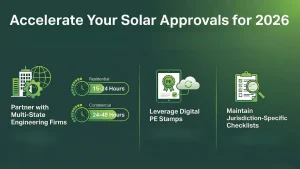
Partner with Multi-State Engineering Firms
Working with engineering firms licensed across all 50 states eliminates the headache of finding local engineers for each project. Look for services offering 15-24 hour turnaround times for residential projects. Additionally, 24-48 hour turnaround for commercial installations keeps your pipeline moving forward.
Leverage Digital PE Stamps
Many jurisdictions now accept electronic PE stamps, which dramatically accelerates approval timelines. Confirm whether your local AHJ accepts digital submissions—it could shave days off your permitting schedule. Moreover, digital workflows reduce paper handling and improve document tracking.
Maintain Jurisdiction-Specific Checklists
If you work in multiple jurisdictions, maintain detailed checklists for each area’s specific solar permitting requirements. This documentation becomes invaluable when training new team members or expanding into additional markets.
The Real Cost of Permit Rejections
Permit rejections don’t just cause delays—they cascade into serious financial problems. A two-week setback means rescheduling installation crews and explaining delays to frustrated clients.
Many installers report rejection costs ranging from $2,000 to $5,000 per project. These costs include re-engineering fees, administrative time, and lost momentum. Furthermore, weather window concerns can push projects into less favorable seasons.
Looking Ahead: 2026 Compliance Trends
The regulatory environment isn’t becoming more relaxed—expect solar permitting requirements to tighten as the industry matures. Federal policy changes, including FEOC restrictions and domestic content requirements, are adding complexity at every level.
However, standardization efforts are gaining traction. More states are implementing platforms like SolarAPP+ that provide instant permit approval for code-compliant systems. This trend toward automation will benefit installers who maintain high design standards.
Conclusion: Your Partner for Seamless Solar Compliance
Navigating solar permitting requirements across all 50 states demands expertise, experience, and rapid turnaround times. That’s exactly what EnergyScape Renewables delivers.
EnergyScape Renewables provides PE stamping services nationwide with industry-leading 15-24 hour turnaround times for residential projects. Our licensed engineers handle both structural and electrical stamps, ensuring your projects sail through permitting without rejections. We understand solar—which means we speak the same language as your design team.
Whether you’re installing residential systems or managing large commercial projects, having the right engineering partner makes all the difference. Don’t let solar compliance regulations slow your growth.
For comprehensive solar project management solutions that integrate seamlessly with professional engineering services, visit Sunscape Solar to see how modern solar software is streamlining the entire installation workflow from design through final inspection.
The solar industry is growing faster than ever, and 2026 will be a pivotal year for installers who master state-by-state solar permitting requirements. Get ahead of the curve, build compliance into your standard processes, and watch your business thrive.
sjayakanth@energyscaperenewables.com